
The New Reality of Interview Preparation
Over the past 3–5 years, job interviews have changed dramatically. Remote hiring has become the norm, companies increasingly rely on AI-driven screening tools, and hiring cycles have become faster and more competitive than ever. Candidates are no longer just preparing for one conversation—they’re navigating multiple rounds, asynchronous video interviews, and algorithm-based evaluations, often all within a short timeframe.
This shift has created a new kind of pressure. Job seekers are expected to perform at a high level with less preparation time, adapt quickly to different interview formats, and stand out in a crowded talent pool. The margin for error is smaller, and the expectations are higher.
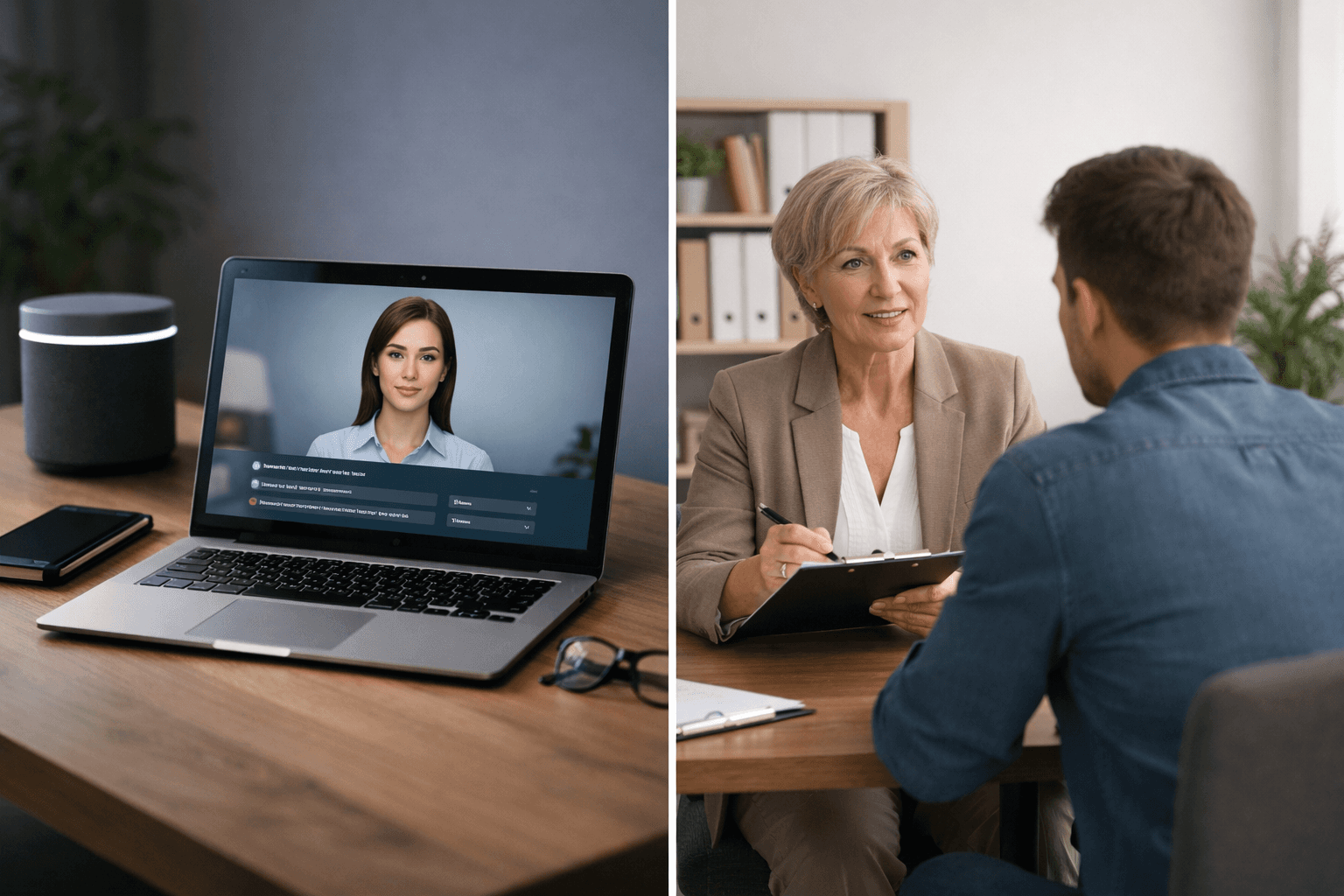
As a result, two main approaches to interview preparation have emerged. On one side, AI interview assistants offer speed, scalability, and on-demand support. On the other, career coaches provide human insight, personalized feedback, and strategic guidance.
So which one actually helps you get hired faster? The answer isn’t as simple as picking one over the other. It depends on your goals, your timeline, and how you prepare. This article breaks down both options to help you decide what works best for your situation.

What Are AI Interview Assistants?
AI interview assistants are tools designed to help candidates prepare for interviews or perform better during them using artificial intelligence. Instead of relying only on static resources, these tools actively support users by analyzing questions, generating responses, and offering guidance tailored to specific roles or industries.
Typically, AI interview assistants work by:
Analyzing interview questions in real time or from practice sessions
Generating structured, relevant answers based on context
Providing feedback either instantly or after the interview
Their appeal comes from a few clear advantages. First, speed—responses are generated almost instantly, which is critical when time is limited. Second, accessibility—they are available 24/7, unlike scheduled coaching sessions. Third, scalability—users can practice as many times as they want without additional cost or constraints.
In real-world scenarios, candidates often use these tools for last-minute interview preparation, technical interview practice, or structuring answers to common behavioral questions.
This shift reflects a broader evolution in how people prepare for interviews. In the past, candidates relied heavily on Google searches, blog posts, or memorized answers. Today, preparation has become more interactive, with AI tools offering dynamic, context-aware support that adapts to each user.
For example, Sensei AI provides real-time interview assistance by listening to interviewer questions and generating answers instantly. It uses your resume and role-specific context to produce more relevant responses. This makes it different from traditional prep tools that only offer static guidance.
Try Sensei AI for Free
What Do Career Coaches Actually Offer?
Career coaches are professionals who help candidates navigate the job search process and improve their interview performance through personalized guidance. Unlike automated tools, they focus on understanding your background, goals, and challenges, offering advice that is tailored to your specific situation.
Typically, career coaches provide:
Mock interviews that simulate real hiring scenarios
Personalized feedback on your answers, communication style, and body language
Long-term career strategy, including positioning yourself for future roles
One of their biggest strengths lies in human intuition. Coaches can pick up on subtle cues, such as hesitation or lack of confidence, and help you refine not just what you say, but how you say it. Their emotional intelligence also allows them to guide candidates through anxiety, uncertainty, or career transitions. In addition, they help craft compelling personal narratives, ensuring your experience is presented clearly and strategically.
However, there are practical limitations to consider. Career coaching can be expensive, typically ranging from $50 to $300 per session depending on the coach’s experience. Scheduling can also be a constraint, especially if you need immediate help. Unlike AI tools, repetition is limited—you cannot realistically do dozens of mock interviews without significant cost and time investment.
It’s also worth noting that coaching quality varies widely. An experienced coach can provide transformative insights, while a less skilled one may offer only generic advice, making outcomes less predictable.
Side-by-Side Comparison
To better understand the differences, it helps to look at both options side by side. Each approach has clear strengths, but they serve different purposes depending on what you need most during your interview preparation.
AI Assistants vs Career Coaches
Category | AI Interview Assistants | Career Coaches |
|---|---|---|
Speed | Instant responses | Depends on availability |
Cost | Low or subscription-based | High per session |
Personalization | Based on data inputs | Based on human understanding |
Practice Frequency | Unlimited | Limited |
Real-time Support | Yes (in some tools) | No |
Emotional Support | Minimal | Strong |
Looking at the table, a clear pattern emerges. AI interview assistants excel in efficiency—they allow you to practice repeatedly, get instant feedback, and improve quickly through iteration. This makes them especially useful for candidates who need to prepare under time pressure or handle multiple interviews at once.
On the other hand, career coaches offer something AI cannot fully replicate: depth. Their ability to understand your story, adjust your positioning, and provide emotional support can significantly impact your confidence and clarity. This is particularly valuable in complex or high-stakes situations.
Ultimately, the “better” option depends on where you are in your journey. If you need speed and repetition, AI tools are hard to beat. If you need clarity, confidence, and strategic direction, a human coach may be the stronger choice.
When AI Interview Assistants Work Best

AI interview assistants tend to perform best in situations where speed, repetition, and efficiency matter most. For example, if you have an interview scheduled for tomorrow, there is little time for lengthy coaching sessions or deep preparation. In these cases, AI tools can help you quickly structure answers, identify gaps, and refine your responses within hours instead of days.
They are also especially useful for candidates applying to a high volume of roles. When you are sending out applications regularly, it becomes difficult to tailor your preparation manually for each opportunity. AI allows you to adjust quickly, practice different scenarios, and stay consistent across multiple interviews. This is particularly valuable for technical or structured interviews, where patterns repeat and clear frameworks can significantly improve performance.
The key advantage here is the feedback loop. AI tools let you iterate rapidly—test an answer, improve it, and try again almost instantly. This continuous cycle helps build confidence and clarity much faster than traditional methods.
A common example is a candidate applying to 10 or more roles per week. Instead of preparing from scratch each time, they can rely on AI to streamline their preparation and stay ready for any interview that comes up.
Sensei AI fits naturally into this workflow by providing real-time assistance during live interviews. It listens to interviewer questions and generates responses instantly, without requiring manual input. Its hands-free design and fast response time make it practical in high-pressure situations.
The practical takeaway is simple: AI interview assistants are most effective when execution and repetition are the priority. They help you move faster, practice more, and adapt quickly to different interview scenarios.
Practice with Sensei AI
When Career Coaches Are the Better Choice
While AI tools excel in speed and repetition, career coaches become far more valuable in situations that require deeper thinking and personal transformation. One of the most common cases is career transitions. If you are switching industries or roles, the challenge is not just answering questions—it is explaining your story in a way that makes sense to employers.
Career coaches also tend to be more effective for senior-level roles. At this stage, interviews are less about textbook answers and more about leadership, decision-making, and strategic thinking. A coach can help refine how you present your experience, ensuring your answers reflect both impact and maturity.
Another key area is confidence and communication. Some candidates know their material well but struggle to express it clearly under pressure. Coaches can identify these gaps and provide targeted feedback, helping you improve delivery, tone, and structure.
The reason coaches are effective in these scenarios is that they help reshape narratives. Instead of just improving answers, they help you reframe your entire professional story. They also provide accountability, ensuring you stay consistent and committed throughout your preparation.
For example, someone transitioning from marketing to product management may struggle to explain how their past experience is relevant. A coach can help connect the dots, turning a confusing background into a compelling narrative.
Another major differentiator is emotional and psychological support. Career coaches can help manage stress, build confidence, and guide candidates through uncertainty—something AI tools currently cannot replicate at the same depth.
The Hybrid Approach (What Smart Candidates Do)
In practice, the most effective candidates rarely rely on just one method. Instead, they combine AI interview assistants and career coaching to get the best of both worlds. This hybrid approach allows them to move quickly while still benefiting from deeper, more strategic guidance when needed.
A common workflow looks like this:
Use AI tools for daily practice, quick iterations, and answering common interview questions
Work with a career coach periodically to refine messaging, improve storytelling, and address specific weaknesses
This combination helps reduce overall costs while maximizing effectiveness. Instead of paying for multiple coaching sessions just to practice basics, candidates can handle repetition on their own and reserve coaching time for high-impact improvements. It also creates a more balanced preparation process—fast execution paired with thoughtful refinement.
Sensei AI’s AI Playground fits naturally into this workflow as a text-based tool for asking interview and career-related questions. It allows users to explore different answers, clarify concepts, and get guidance in a more flexible, low-pressure format. This makes it a useful bridge between independent practice and structured coaching.
In addition, tools like the AI Editor provide simple resume generation support by turning your inputs into a structured format. While not a replacement for deep career strategy, it can help streamline the early stages of preparation and save time on basic tasks.
Try Sensei AI Now!
Common Mistakes Candidates Make
Even with access to powerful tools and professional guidance, many candidates still struggle—not because of a lack of resources, but because of how they use them. One of the most common mistakes is over-relying on AI without truly understanding the answers it generates. While AI can provide well-structured responses, simply memorizing them often leads to robotic delivery and poor follow-up performance.
Another issue is treating career coaching as a one-time fix. Some candidates expect a single session to solve all their problems, but real improvement requires consistency. Without continued practice and reflection, even the best advice loses its impact over time.
Candidates also frequently fail to practice under realistic conditions. Reading answers or rehearsing casually is very different from performing under pressure. Without simulating actual interview environments, it becomes harder to manage timing, nerves, and clarity during the real conversation.
Finally, many people ignore feedback loops. Whether it comes from AI tools or coaches, feedback is only useful if it is actively applied and tested in future practice.
To avoid these pitfalls:
Focus on understanding AI-generated answers, not just memorizing them
Treat coaching as an ongoing process rather than a one-time solution
Practice in realistic settings, including timed and high-pressure scenarios
Actively apply feedback, refine your responses, and track your progress over time
Making these adjustments can significantly improve how effective your preparation actually is.
It’s Not About Tools — It’s About Strategy
At the end of the day, neither AI interview assistants nor career coaches are magic solutions that guarantee success. Both can significantly improve your performance, but only when used correctly and with clear intention. Relying too heavily on one approach without understanding its strengths and limitations often leads to incomplete preparation.
The real difference comes down to how candidates use these tools and services. Those who approach interview preparation strategically tend to outperform those who simply follow trends or rely on a single method. It is not about choosing the “best” tool, but about building an effective system.
In simple terms:
AI provides speed, scale, and execution, helping you practice faster and handle more scenarios
Career coaches provide depth, clarity, and confidence, helping you refine your story and communication
Both play important roles in modern interview preparation, but they serve different purposes.
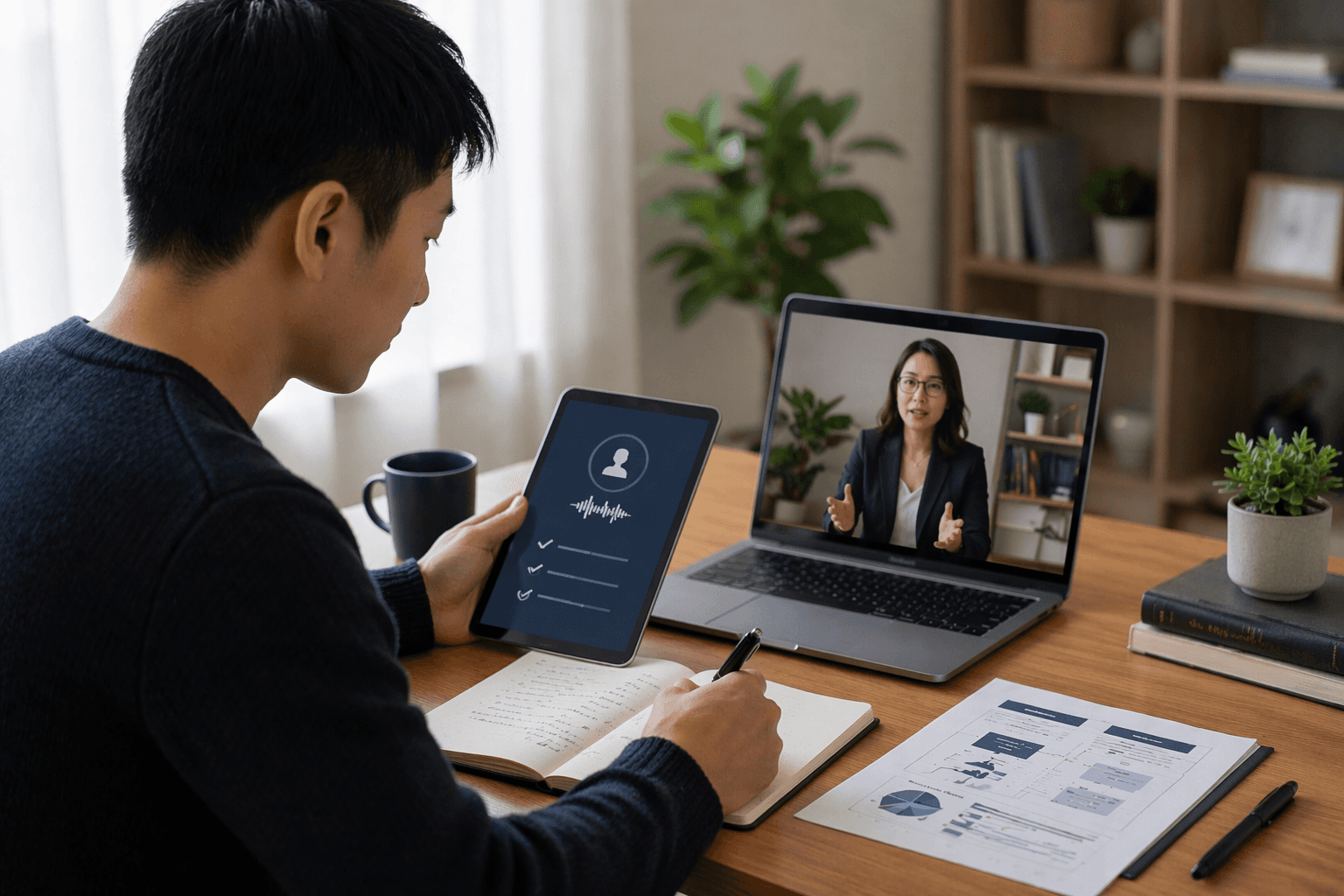
A practical approach is to start with AI for efficiency and rapid practice. Once you have a solid foundation, you can add coaching when you need deeper refinement, strategic guidance, or confidence building. This combination creates a balanced and effective preparation strategy.
FAQs
Are AI interview assistants better than human coaches?
The answer depends on your specific needs and stage in the interview process. AI interview assistants are generally better for speed, repetition, and structured practice, especially when you need to prepare quickly or handle multiple interviews. Career coaches, on the other hand, are more effective when you need deeper guidance, storytelling refinement, or emotional support. In many cases, the best results come from combining both rather than choosing one over the other.
Can AI help during a live interview?
Yes, some AI tools can provide real-time assistance during live interviews by detecting questions and generating responses instantly. These tools are designed to support candidates under pressure by helping them structure answers quickly and stay aligned with the role requirements. However, effectiveness depends on how well the user integrates the tool into their natural flow of communication.
Are career coaches worth the cost?
Career coaches can be worth the investment in specific situations, especially for senior roles, career transitions, or candidates who need help improving communication and confidence. However, they are not always necessary for every job seeker. For many people, targeted coaching sessions combined with self-practice can be more cost-effective than ongoing full coaching programs.
What is the best way to prepare for interviews in 2026?
The most effective approach in 2026 is a hybrid strategy. Candidates benefit from using AI tools for fast, repetitive practice and immediate feedback, while also leveraging career coaches for deeper refinement and strategic direction. This combination ensures both efficiency and quality in preparation, helping candidates perform more confidently in modern hiring environments.

Shin Yang
Shin Yang is a growth strategist at Sensei AI, focusing on SEO optimization, market expansion, and customer support. He uses his expertise in digital marketing to improve visibility and user engagement, helping job seekers make the most of Sensei AI's real-time interview assistance. His work ensures that candidates have a smoother experience navigating the job application process.
Learn More
Tutorial Series: Introducing Our New Chrome Extension Listener
Sensei AI vs Interviewing.io: Which Interview Tool Is Better for You in 2026?
Sensei AI vs Huru: Which AI Interview Tool Is Better in 2026?
Sensei AI vs Interview Warmup: Which Interview Practice Tool Is Better in 2026?
How Recruiters Detect AI Answers (and How to Stay Authentic)
Interview Copilot vs Traditional Interview Coaching: Which Is Better for Your Next Interview?
Best AI for Behavioral Interview Questions: 9 Tools to Practice Smarter in 2026
Google Interview Warmup Alternatives: 9 Best Tools to Practice for Interviews in 2026
How to Practice for an Interview by Yourself: A Step-by-Step Guide That Actually Works
Best AI Tools for Job Seekers in 2026
Sensei AI
hi@senseicopilot.com