
Why Asynchronous Interviews Are Everywhere Now
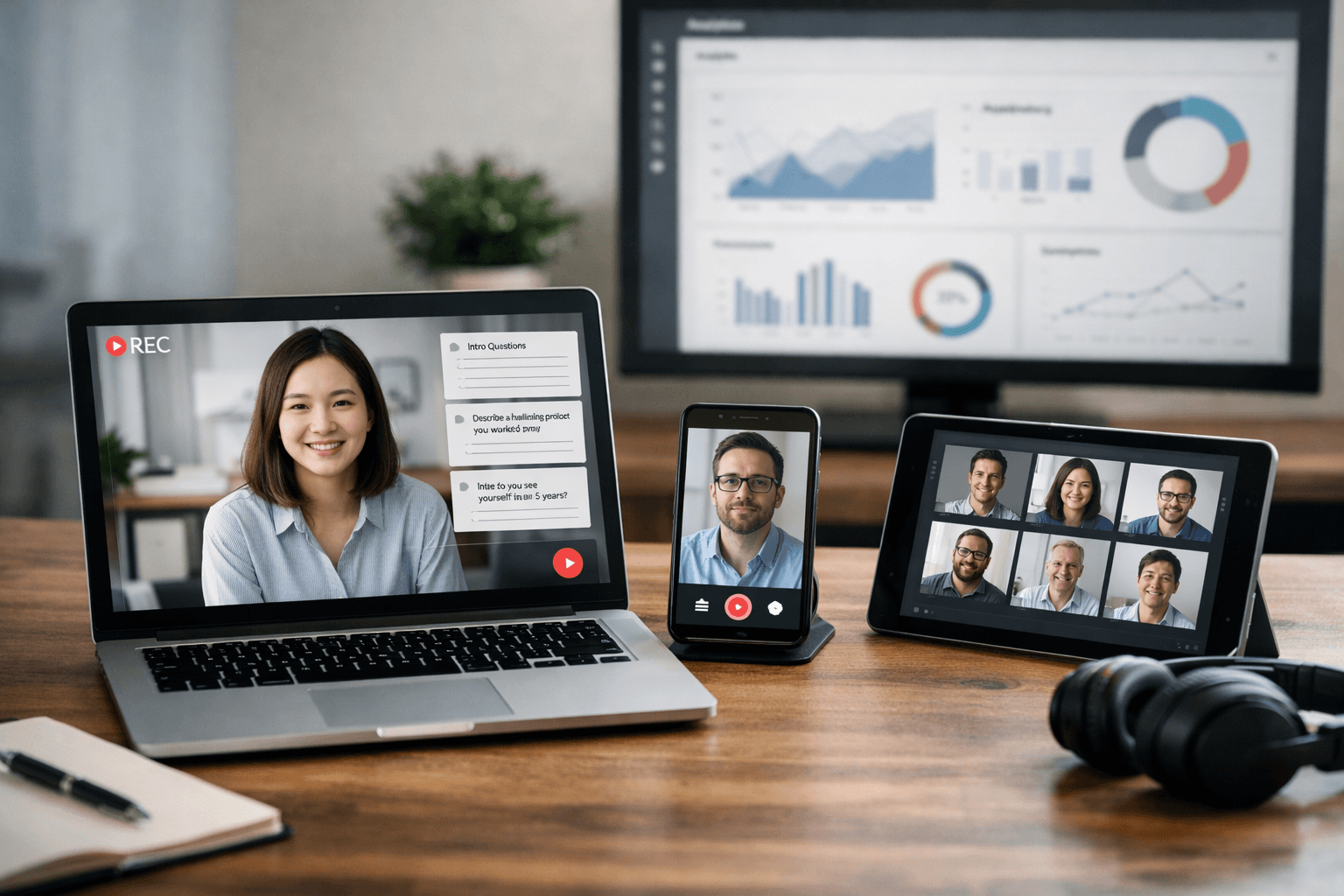
You open a link, see a question on your screen, take a breath—and start recording. No interviewer on the other side, no small talk, no real-time reactions. Just you, your camera, and a countdown timer. That’s the reality of asynchronous interviews in 2026.
Asynchronous interviews—also known as one-way or pre-recorded interviews—allow candidates to respond to questions on their own time. Instead of speaking to a live interviewer, you record your answers and submit them for review later. It may feel unusual at first, but this format has quickly become a standard part of modern hiring.
The shift didn’t happen randomly. As companies expanded globally and remote work became the norm, scheduling interviews across time zones became a bottleneck. Async interviews solved that problem almost overnight. Today, an estimated over 60% of companies use some form of asynchronous screening (industry estimate), especially in early hiring stages.
This guide will walk you through everything you need to know—from how these tools work, to their pros and cons, and most importantly, how you can stand out in a format where you don’t get a second chance to respond in real time.
What Are Asynchronous Interview Tools (And How They Actually Work)
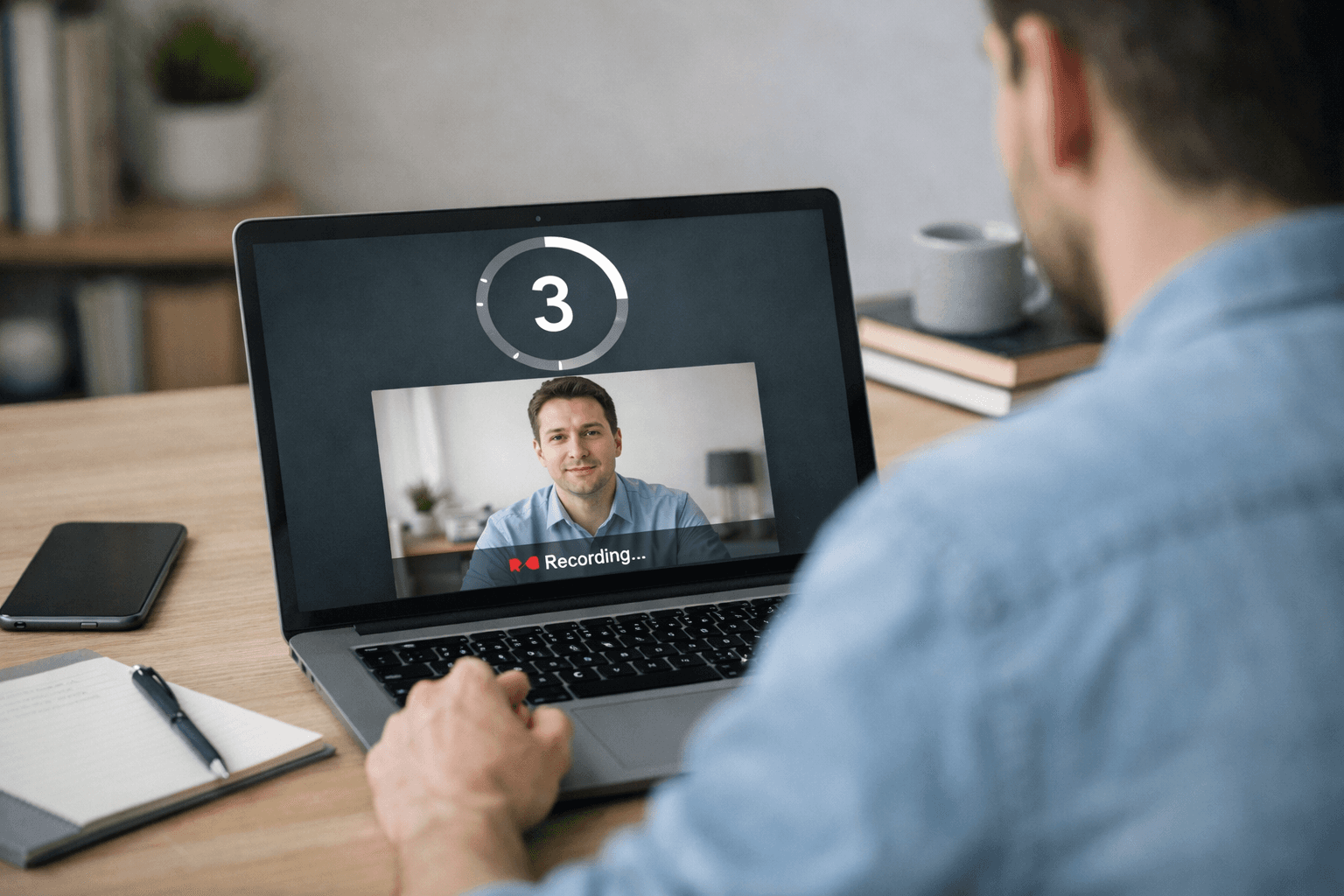
Asynchronous interview tools are platforms that allow candidates to complete interviews without a live interviewer present. Instead of joining a scheduled call, you respond to pre-set questions by recording your answers on video. It’s structured, timed, and designed to be reviewed later by recruiters.
Typical Candidate Experience
The process is usually simple but can feel unfamiliar the first time:
Receive a link from the employer
Read or watch a pre-recorded question
Get a short preparation window (typically 30–90 seconds)
Record your response (usually 1–3 minutes)
Submit and move on to the next question
You’re often allowed only one or two attempts, which adds a bit of pressure to get it right.
What Recruiters See
On the other side, recruiters aren’t watching you live—they’re reviewing your responses in batches:
Video recordings of your answers
AI-generated scoring or keyword analysis (in some tools)
Structured dashboards to compare candidates side by side
Unlike live interviews, there’s no back-and-forth conversation here. You won’t get follow-up questions or immediate feedback. That’s what makes async interviews efficient—but also why preparation matters more than ever.
Why Companies Love Async Interviews (And Why That Matters to You)
Asynchronous interviews aren’t just a trend—they solve real hiring problems. Once you understand why companies rely on them, it becomes easier to adapt your strategy and use the format to your advantage.
For Employers
For hiring teams, the biggest benefit is efficiency. Instead of coordinating dozens of interview slots, recruiters can review candidates on their own schedule. This dramatically speeds up early-stage screening and reduces time-to-hire.
Faster screening that saves hours of back-and-forth scheduling
Standardized evaluation, where every candidate answers the same questions
Scalable hiring, especially useful for high-volume roles or global applicants
It also helps reduce bias in some cases, since structured responses are easier to compare side by side.
For Candidates
From a candidate perspective, async interviews remove some traditional stress points—but introduce new ones.
Flexible timing—you can complete it when you’re ready
A short preparation window before answering each question
No need to coordinate schedules across time zones
That said, flexibility doesn’t automatically make things easier.
But convenience doesn’t mean easy. You still need to think quickly, communicate clearly, and perform without real-time feedback.
In some interview scenarios, tools like Sensei AI can support candidates by listening to interview questions and generating structured responses in real time based on their resume and role context. This can help reduce pressure and bring more clarity to your answers—especially when you’re unsure how to structure your response.
Try Sensei AI for Free
The Downsides (What No One Tells You)
Async interviews are efficient—but they’re not always candidate-friendly. In fact, many people struggle with them not because they’re harder, but because they’re different in ways you don’t expect.
It Feels One-Sided
One of the biggest challenges is the lack of interaction. You’re speaking, but no one is responding.
No follow-up questions to clarify your answer
No feedback, facial expressions, or cues
No chance to adjust mid-response
It can feel like you’re talking into a void, which makes it harder to gauge how well you’re doing.
Performance Pressure Is Different
Instead of conversational pressure, async interviews create a more internal kind of stress.
Talking to a camera feels unnatural for most people
You may overthink every word or pause
Limited retakes can increase anxiety rather than reduce it
Some candidates even spend too much time trying to sound “perfect,” which often backfires.
AI Bias & Over-Automation
Many platforms now include AI-assisted evaluation, which adds another layer of complexity.
Some tools analyze tone, keywords, or speech patterns
Strong communicators may be favored over thoughtful ones
Subtle human qualities can be overlooked
A common mistake is underestimating how much preparation this format requires. In reality, candidates who treat async interviews casually often perform worse than those who approach them like a live interview.

Top Asynchronous Interview Tools in 2026
There’s no single “best” async interview tool—different platforms are built for different hiring needs. Some are designed for large enterprises handling thousands of candidates, while others focus on simplicity and speed for smaller teams.
Popular Async Interview Platforms in 2026
Tool Name | Best For | Key Features | Notable Limitation |
|---|---|---|---|
HireVue | Enterprise hiring | AI-driven assessments, video interviews, game-based evaluations | Can feel overly automated to candidates |
Spark Hire | Small to mid-sized companies | Easy setup, one-way interviews, collaborative review tools | Limited advanced AI features |
Willo | Startups and remote teams | Simple UX, async video, strong candidate experience | Fewer integrations compared to larger tools |
myInterview | Employer branding | Customizable branding, video storytelling focus | Less structured evaluation tools |
VidCruiter | Regulated industries | Structured workflows, compliance features, interview scheduling + async | More complex setup |
Each of these tools reflects a different hiring philosophy. Enterprise platforms like HireVue and VidCruiter tend to emphasize structure, scalability, and AI-assisted evaluation. In contrast, tools like Willo or Spark Hire prioritize ease of use and a more human-centered candidate experience.
Another key difference is how decisions are made. Some platforms rely heavily on AI scoring—analyzing keywords, tone, or delivery—while others lean more on human reviewers comparing responses manually. Neither approach is perfect, which is why candidates need to be prepared for both.
It’s also worth noting that tools like Sensei AI are not asynchronous interview platforms themselves. Instead, they work alongside the process by helping candidates prepare and respond more effectively—analyzing questions and generating personalized answers based on your resume and role context, which can be especially useful when practicing for structured interview formats.
Practice with Sensei AI
How to Actually Stand Out in an Async Interview
Standing out in an async interview isn’t about being perfect—it’s about being clear, structured, and natural on camera. Since you don’t get real-time feedback, small details in delivery and preparation matter much more.
Before You Hit Record
Preparation is where most candidates either win or lose.
Read the question carefully and identify what it’s really asking
Structure your answer using a simple framework like STAR (Situation, Task, Action, Result)
Practice your answer out loud at least once before recording
Even 30 seconds of structured thinking can make your response significantly more coherent.
During Recording
Once the timer starts, your focus should shift to delivery.
Maintain eye contact by looking at the camera, not the screen
Speak at a steady, natural pace—don’t rush to fill silence
Avoid sounding overly memorized; aim for conversational clarity
Remember, recruiters are watching for communication skills as much as content.
Common Mistakes to Avoid
Many candidates lose points on things that are completely fixable.
Rambling without a clear structure
Sounding robotic due to over-rehearsal
Ignoring time limits and getting cut off mid-answer
Being concise is often more impressive than trying to say everything.
Pro Tip: Treat It Like a Real Conversation
Even though no one is responding in real time, your energy still comes through the screen. Imagine you’re speaking to a real person, not a recording tool. A slight smile, confident tone, and clear intent can make your answers feel far more engaging—and far more memorable.
Using AI to Prepare (Without Sounding Like AI)
AI has quickly become part of how candidates prepare for interviews. From brainstorming answers to refining structure, it can be a powerful advantage—if used correctly. The problem is, many candidates rely on it too heavily, which leads to answers that sound polished but lack personality.
The biggest risk? Generic responses. When everyone uses similar prompts and tools, answers start to feel the same. Recruiters can spot this easily, especially in async interviews where delivery and authenticity matter more.
What Works
Used thoughtfully, AI can significantly improve your preparation process.
Brainstorming ideas when you’re unsure how to approach a question
Structuring answers into clear, logical formats
Practicing different variations of the same response
It’s best used as a thinking partner, not a replacement for your own voice.
What Doesn’t
Where candidates go wrong is treating AI outputs as final answers.
Copy-pasting responses without adapting them
Over-scripted delivery that sounds unnatural on camera
If your answer sounds like it was written for “any candidate,” it probably won’t stand out.
Tools like Sensei AI’s AI Playground can be especially useful here. It allows you to practice interview questions in a conversational way and refine your responses based on your own background. The key is to use it to shape your thinking—not replace it—so your final answers still feel authentic and personal.
Try Sensei AI Now!
The Future of Async Interviews (2026 and Beyond)
Asynchronous interviews are still evolving, and the next few years will likely refine—not replace—the format. The core idea of flexibility and scalability is here to stay, but how these interviews are evaluated and integrated into hiring workflows is changing quickly.
One major trend is the rise of AI-assisted evaluation. More platforms are using AI to analyze responses at scale, looking at factors like clarity, structure, and relevance. While this can speed up decision-making, most companies are still combining AI insights with human review to avoid over-reliance on automation.
Another shift is deeper integration with Applicant Tracking Systems (ATS). Instead of being a separate step, async interviews are becoming embedded into the overall hiring pipeline—making it easier for recruiters to track, compare, and move candidates forward efficiently.
We’re also seeing more hybrid interview models. Candidates might complete an async round first, followed by live interviews for shortlisted applicants. This approach balances efficiency with human interaction.
Looking ahead, candidate-side tools will become increasingly important. As the format becomes more standardized, preparation—not just qualifications—will play a bigger role in determining who stands out.
Should You Be Worried or Prepared?

Asynchronous interviews can feel unfamiliar at first—but they’re not something to fear. They’re simply a different format, with a different set of expectations. Once you understand how they work, they become much more manageable.
Instead of seeing async interviews as a barrier, it’s more useful to treat them as a skill. Like any skill, it improves with practice, awareness, and the right preparation. The candidates who perform well aren’t necessarily the most experienced—they’re the ones who understand how to communicate clearly within this format.
What matters most is adaptability. Being able to structure your thoughts quickly, speak naturally to a camera, and stay composed without feedback is what sets strong candidates apart.
The format may continue to evolve, but one thing is clear: preparation is no longer optional. The more familiar you are with async interviews, the more confident—and effective—you’ll be.
Candidates who understand the format will always have an edge.
FAQs
How to prepare for a job interview in 2026?
Preparing for interviews in 2026 is no longer just about memorizing answers—it’s about adapting to different formats, including async, AI-assisted, and hybrid interviews.
Research the company, role, and recent industry trends
Prepare structured answers using frameworks like STAR
Practice both live and recorded responses (camera presence matters now)
Get comfortable with AI-driven interviews and tools
Prepare concise, personalized stories instead of generic answers
The key shift: communication clarity and adaptability now matter as much as technical knowledge.
How to prepare for an asynchronous interview?
Async interviews require a slightly different strategy since there’s no real-time interaction.
Carefully read or watch each question before answering
Use a simple structure (like STAR) to stay organized
Practice speaking clearly on camera
Keep answers concise and within time limits
Simulate the experience by recording yourself beforehand
Treat it like a real interview—even though it’s one-way, your delivery and energy still matter.
What is the asynchronous interview process?
An asynchronous interview is a one-way, pre-recorded interview format where candidates respond to questions without a live interviewer.
The typical process looks like this:
You receive an interview link from the employer
You read or watch pre-set interview questions
You get a short preparation time (usually 30–90 seconds)
You record your answer (typically 1–3 minutes)
Your responses are submitted and reviewed later by recruiters
Recruiters then evaluate your answers, sometimes using AI tools alongside human review.
What is the 70 30 rule in hiring?
The 70/30 rule in hiring generally refers to how candidates should balance their interview responses:
70% of your answer should focus on what you did (your actions, decisions, and contributions)
30% should focus on context (the situation, team, or background)
This helps ensure your answers are results-driven rather than overly descriptive.
In practice, many candidates make the mistake of over-explaining the situation and not clearly showing their impact. The 70/30 rule keeps your answers focused, concise, and more compelling to recruiters.

Shin Yang
Shin Yang is a growth strategist at Sensei AI, focusing on SEO optimization, market expansion, and customer support. He uses his expertise in digital marketing to improve visibility and user engagement, helping job seekers make the most of Sensei AI's real-time interview assistance. His work ensures that candidates have a smoother experience navigating the job application process.
Learn More
Tutorial Series: Introducing Our New Chrome Extension Listener
Beyond Screen Recording: 7 Things Modern Coding Assessments Now Track (And How to Stay Calm)
12 “Digital Wellness” Reasons to Decline a Meeting (That HR and Your 2026 Calendar Can’t Flag)
The "Pre-Layoff" Checklist: 7 Subtle Signs Your Role is Being Automated Away (And How to Pivot Before the Announcement)
The Ghost Applicant Crisis: How to Get Your LinkedIn Message Read When Recruiters Are Buried Under AI Spam
12 Smart Ways Employees Are Declining Return-to-Office Orders in 2026
The Salary Bluff: How to Force Recruiters to Reveal the Real Pay Range Without Sounding Aggressive
How to Spot Ghost Jobs: Why So Many Job Postings Aren’t Real (And How to Avoid Wasting Weeks Applying)
The 15-Minute Zoom Interview Prep: What Actually Matters (And What Doesn’t)
The Sustainability Pivot: How to Rebrand Your Corporate Experience for Green-Tech Interviews (Without Starting Over)
Sensei AI
hi@senseicopilot.com