
Why Everyone Is Asking This Question in 2026
AI is now part of the modern job search. Candidates use it to improve resumes, write cover letters, research companies, practice interview questions, and organize career plans. What felt experimental a few years ago now feels normal. Because of that shift, more job seekers are asking an important question: does AI interview prep create a real advantage, or is it just another short-lived trend?
The question matters because hiring has changed quickly. Many companies move faster than before, use structured scorecards, and screen more applicants in less time. Remote hiring is common, and one-way video interviews remain popular for early rounds. In many cases, candidates have fewer chances to make a strong first impression, so preparation matters more than ever.
At the same time, the market is crowded. Skilled applicants are competing for the same roles, and even strong candidates can struggle if their answers are unclear or forgettable. That pressure pushes people toward tools that promise better performance.
This article is not here to praise every AI product or dismiss the category entirely. The goal is simpler: help you understand what genuinely works, what is often exaggerated, and how to prepare in a way that still feels natural and human.
Here is the key truth: AI can be useful, but only when used well. Poor use can make you sound robotic, generic, or overly confident. Smart use can improve clarity, speed, and confidence.

What AI Interview Prep Usually Includes Today
AI interview prep is no longer one single type of tool. In 2026, the market includes several categories, each designed to solve a different problem. Some tools help you practice, some improve delivery, and others support live interviews. Understanding these differences matters more than chasing whatever platform is trending.
Mock Interview Simulators
These tools recreate interview scenarios by asking common behavioral, technical, or situational questions. Many include timers, follow-up questions, and scoring systems. They are useful for candidates who need repetition, confidence, and practice under light pressure.
Answer Feedback Tools
This category focuses on how you communicate. Platforms may review structure, filler words, pacing, confidence, clarity, and relevance. Instead of only asking questions, they help users understand why an answer works or fails. This can be valuable for candidates who know their experience well but struggle to explain it clearly.
Real-Time Copilots
Some candidates now use live support tools such as Sensei AI during interviews. These systems detect interviewer questions and generate personalized responses in real time using uploaded resumes, target role details, and user preferences. Because responses are fast, some job seekers use them for both technical and behavioral interviews where timing and clarity matter.
Text-Based Career Assistants
AI chat tools are helpful before the interview begins. They can brainstorm strong examples, turn messy thoughts into STAR answers, refine wording, explain difficult questions, or suggest better ways to describe achievements. They are especially useful for solo preparation.
Why the Category Matters More Than the Brand
Not all AI tools solve the same problem. A nervous speaker may need practice simulation, while an experienced candidate may need sharper storytelling. Choosing the right type of tool usually matters more than choosing the most popular name.
Try Sensei AI for Free
The Real Benefits of AI Interview Prep
AI interview prep can be genuinely useful when expectations are realistic. It is not a magic shortcut, and it will not replace experience, judgment, or strong communication habits. What it can do is make preparation faster, more focused, and easier to repeat. For many candidates, that alone creates a meaningful advantage.
Faster Preparation
Traditional interview prep often takes time to organize. You need to find questions, think of examples, and decide what to improve next. AI tools speed up that process by generating likely questions, identifying weak areas, and suggesting next steps instantly. This allows candidates to practice more questions in less time and cover more scenarios before interview day.
Better Structure
Many people know what they want to say but struggle to explain it clearly. AI can help turn scattered thoughts into organized answers, especially through frameworks like STAR: situation, task, action, and result. That structure is valuable because strong experience can still sound weak when delivered poorly.
Confidence Building
Confidence usually comes from repetition, not motivation. Practicing answers multiple times helps reduce nerves, improve pacing, and make ideas easier to recall under pressure. Candidates who rehearse regularly often appear calmer and more professional, even when they still feel nervous inside.
Personalized Improvement
Better tools can adapt to the role you want. A software engineer may need system design or coding communication practice. A sales candidate may need objection handling. A finance applicant may need market reasoning, while a product manager may need stakeholder examples. Tailored prep is more useful than generic advice.
Why This Matters in Real Interviews
Recruiters often decide early whether answers feel clear, relevant, and credible. First impressions are shaped by communication quality as much as raw experience. AI can help polish delivery and sharpen examples, but it cannot invent judgment, real accomplishments, or human presence.
Where AI Interview Prep Fails People
AI interview prep can be helpful, but it also creates problems when used carelessly. Many candidates do not fail because the tool is bad. They fail because they use it in the wrong way. AI works best as support, not as a substitute for real preparation.
Sounding Scripted
One of the biggest mistakes is memorizing generated answers word for word. Over-rehearsed responses often feel polished but unnatural. Interviewers notice when language sounds too perfect, too long, or emotionally flat. Strong answers should feel prepared, not performed like a speech.
Generic Stories
AI can create clean examples, but interviews are won through real experiences. If your answers are not based on projects you actually handled, challenges you faced, or results you achieved, follow-up questions become dangerous. Hiring managers often ask for details, numbers, trade-offs, and lessons learned. Generic stories usually collapse under pressure.
False Confidence
Some candidates mistake reading advice for building skill. Seeing a strong AI-generated answer can feel productive, but recognition is not the same as execution. Real preparation means speaking aloud, refining weak points, and handling unexpected questions. Passive consumption often creates confidence that disappears in live interviews.
Dependency Risk
Heavy reliance on AI can weaken spontaneous thinking. Interviews rarely follow a script. Questions may be unclear, layered, or personal. If you depend on generated prompts for every response, adapting in real time becomes harder. Good candidates think, listen, and adjust naturally.
Use AI the Right Way
Even advanced tools should strengthen preparation, not replace human thinking. Use them to organize ideas, improve clarity, and simulate pressure. Do not let them become your voice or your personality. The strongest candidates sound informed, flexible, and genuine, because the final performance still belongs to the human in the room.

Is It Worth It for Different Types of Job Seekers?
AI interview prep is not equally valuable for everyone. The return depends on your current interview skill, confidence level, and the demands of the role you want. Some candidates need structure from the ground up, while others only need light polishing. Instead of asking whether AI is worth it in general, ask whether it solves your current gap.
Who Benefits Most from AI Interview Prep?
Job Seeker Type | Value Level | Why It Helps |
|---|---|---|
New Graduates | High | They often need structure, common question practice, and help turning academic experience into professional answers. |
Career Changers | High | They need support translating previous experience into language relevant to a new industry or role. |
Experienced Professionals | Moderate | They usually know their value but may need sharper storytelling, stronger examples, and cleaner executive communication. |
Technical Candidates | High | Useful for practicing coding communication, systems thinking, trade-off discussions, and whiteboard explanations. |
Strong Interviewers Already | Lower | If fundamentals are already strong, AI may offer only marginal gains unless targeting elite or highly selective companies. |
Why Newer Candidates Often Gain More
People early in their careers often struggle with answer structure, confidence, and knowing what interviewers want. AI tools can quickly fill those gaps by providing frameworks, practice repetition, and clearer wording.
Why Experienced Candidates Use It Differently
Professionals with years of experience usually do not need beginner advice. They benefit more from refining leadership stories, sharpening metrics, and adapting examples for senior roles.
The Skill Gap Matters Most
The true value depends on the distance between where you are now and where you need to be. Someone already strong may only need small adjustments. A nervous candidate with solid experience may gain major results simply by improving delivery.
The Smartest Way to Judge ROI
Do not measure value by price alone. Measure it by whether it helps you communicate better, interview with less stress, and compete for roles you could not confidently pursue before.
How to Use AI Without Sounding Like AI
The biggest mistake candidates make is using AI output exactly as written. Interviewers do not want polished machine language. They want clear thinking, relevant examples, and authentic communication. The best approach is to use AI as a drafting partner, then turn the final answer into something that sounds like you.
Feed Real Experiences
Give AI real material to work with. Use actual projects, promotions, wins, failures, deadlines, and measurable results. Include numbers when possible, such as revenue growth, time saved, bugs reduced, or clients retained. Real details create believable answers and stronger stories.
Rewrite in Your Voice
Most generated answers are too formal, too long, or too generic. Shorten stiff phrases and replace vocabulary you would never naturally use. If you normally speak simply and directly, keep that style. Good interview answers should sound prepared, not artificial.
Practice Follow-Up Questions
Many candidates prepare only the first response, but interviews are often decided in follow-up moments. Be ready for questions like why you chose that approach, what went wrong, what you learned, or what you would change today. Use AI to generate those deeper prompts and rehearse them aloud.
Blend Human + AI Prep
Use AI to create outlines, improve wording, or identify weak spots. Then practice alone, record yourself, or rehearse with a friend. Speaking aloud exposes issues that silent reading hides.
Use Specialized Tools Carefully
Sensei AI also includes an AI Playground for text-based interview and workplace questions. It can be useful for brainstorming difficult responses or clarifying role-specific topics before an interview. The key is still preparation, not dependency. AI should strengthen your thinking, not replace it.
Practice with Sensei AI
Red Flags When Choosing an AI Interview Tool
Not every AI interview tool deserves your time or money. Some platforms are useful and practical, while others rely on hype, weak outputs, or vague promises. Before subscribing, look beyond marketing pages and focus on whether the tool actually improves preparation.
Fake Claims
Be cautious of products that promise guaranteed jobs, guaranteed offers, or instant interview success. No tool can control hiring decisions. Strong platforms should talk about improvement, practice, and better preparation, not miracle outcomes.
No Personalization
Generic advice has limited value. If a tool cannot consider your resume, experience level, target company, or job description, the output may feel shallow and repetitive. Good prep should reflect your real background and goals.
Slow Responses
Speed matters, especially for tools designed for live support or rapid practice sessions. If responses are delayed, awkward pauses can break momentum and make the product less practical. Fast, smooth interaction creates a better learning experience.
Poor Privacy Standards
Candidates often upload resumes, career history, and personal details. You should understand what data is stored, how long it is kept, and whether it is shared or used for training. If privacy information is unclear, be careful.
No Role-Specific Support
Different careers need different preparation. A marketing candidate may need campaign metrics and stakeholder stories. A backend engineer may need system design and debugging communication. If every user receives the same advice, the tool may not be sophisticated enough.
Choose Substance Over Hype
The best AI interview tools feel practical, relevant, and trustworthy. If the product sounds impressive but does not solve real preparation problems, keep looking.
Smart 7-Day AI Interview Prep Plan
If your interview is one week away, you do not need a perfect plan. You need a focused one. The schedule below helps you improve quickly without burning out. Each day builds confidence, sharper answers, and better delivery.
Day 1: Analyze the Job Description
Read the posting carefully. Highlight required skills, repeated keywords, leadership expectations, and measurable responsibilities. Use AI to predict likely interview questions based on that role. Build a shortlist of the ten questions you are most likely to face.
Day 2: Build Three STAR Stories
Prepare three strong stories from your real experience using the STAR method: situation, task, action, result. Choose examples that show problem solving, teamwork, ownership, and measurable impact. These stories can be adapted to many questions.
Day 3: Practice Behavioral Questions
Use AI tools to rehearse common prompts such as conflict, failure, leadership, and prioritization. Focus on clarity, pacing, and concise storytelling. Improve weak answers immediately after each round.
Day 4: Practice Technical or Functional Questions
Target the role itself. Engineers can practice architecture or debugging communication. Sales candidates can practice objections. Finance candidates can discuss markets or models. Tailored practice is more valuable than generic repetition.
Day 5: Record Yourself Answering Aloud
Use your phone or laptop camera. Watch for filler words, rushed pacing, weak eye contact, and overly long answers. Small delivery fixes can create a major difference.
Day 6: Simulate Pressure Rounds
Set time limits. Ask a friend to interrupt or challenge your answers. Practice staying calm when questions are unclear or difficult. Real interviews often reward composure.
Day 7: Light Review and Confidence Reset
Review notes, refresh key stories, and stop overloading yourself. Rest matters before performance.
Where AI Tools Fit In
Some candidates also use Sensei AI during live interviews because it can detect interviewer questions and generate personalized answers in real time. Still, the strongest results usually come from combining real preparation with smart tools.
Try Sensei AI Now!
Final Verdict: Is AI Interview Prep Worth It in 2026?
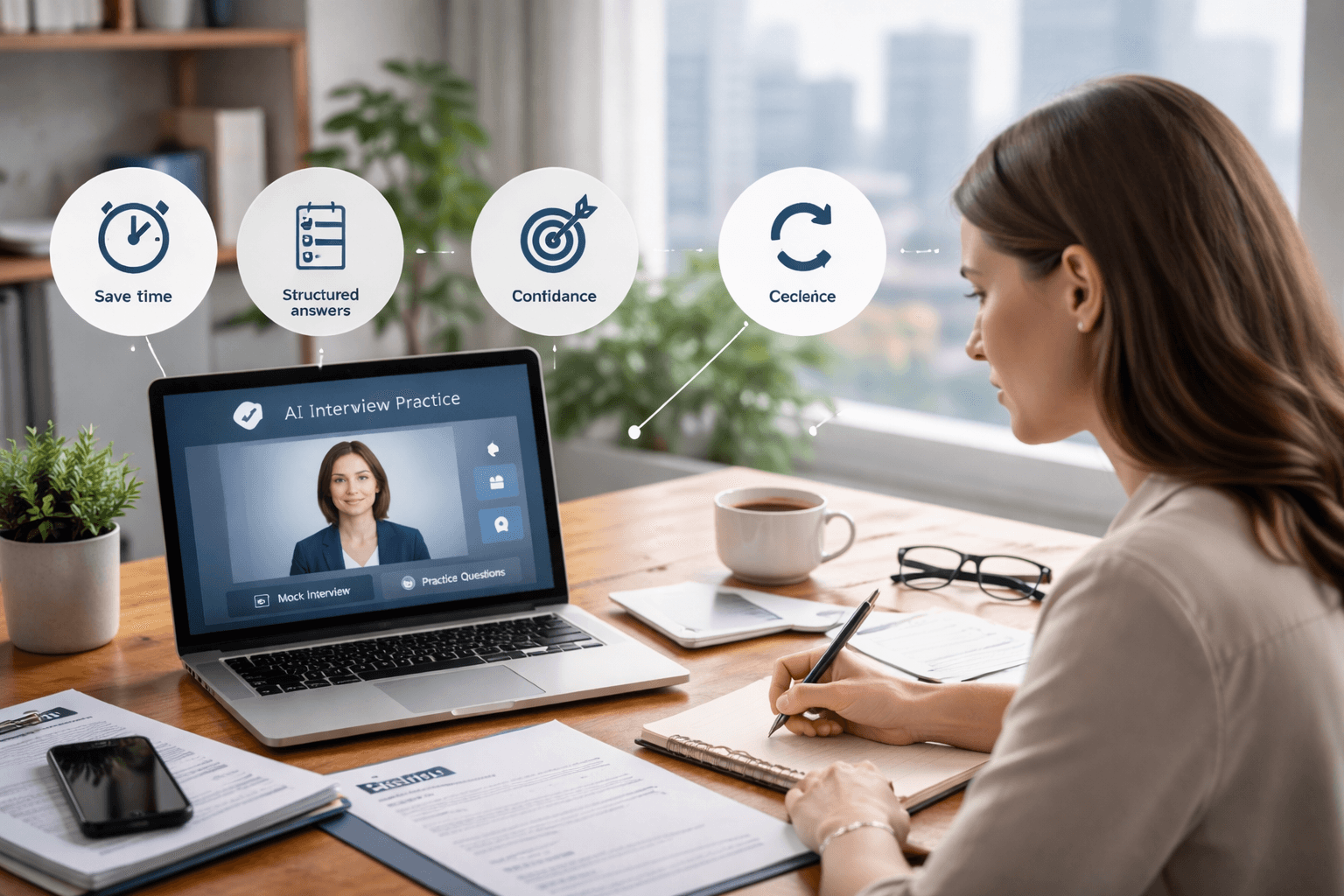
Yes, for many candidates, AI interview prep is worth it. It can save time, improve answer structure, increase confidence, and make practice easier to repeat. For nervous candidates, career changers, and people targeting competitive roles, that support can create a real advantage.
No, it is not magic. AI cannot replace genuine experience, self-awareness, communication skill, or critical thinking. It cannot live your career for you, build real accomplishments, or answer tough follow-up questions with authenticity unless you have done the work behind the scenes.
The smartest way to view AI is as a preparation multiplier. If you already bring effort, curiosity, and discipline, it can help you improve faster. If you expect it to carry you without preparation, results are usually disappointing.
The Best Summary in One Line
AI helps most when you already put in effort. It helps least when you hope it will do the effort for you.
What to Choose Instead of Shortcuts
Look for tools that improve clarity, confidence, and relevance. Choose platforms that help you tell real stories better, understand role-specific expectations, and practice under pressure. Those benefits last beyond one interview.
In 2026, the winners will not be people who simply use AI. They will be people who use it wisely.
FAQs
Is it worth learning AI in 2026?
Yes, learning AI in 2026 is still highly valuable. AI is no longer a niche skill—it’s becoming a baseline across industries like marketing, finance, software engineering, healthcare, and product management.
What makes it worth learning:
AI tools are integrated into most workplaces (automation, analytics, content, coding)
Job roles increasingly require AI literacy, not just technical roles
It boosts productivity (e.g., faster research, writing, and decision-making)
It helps you stay competitive as AI continues to reshape job markets
You don’t necessarily need to become a machine learning engineer. Even understanding how to use AI tools effectively already gives a strong advantage.
How to prepare for an interview in 2026?
Interview preparation in 2026 is a mix of traditional skills + AI-era readiness.
Key steps:
1. Understand the role deeply
Study job descriptions carefully
Identify required technical + behavioral competencies
2. Practice structured answering
Use frameworks like STAR (Situation, Task, Action, Result)
Focus on clarity and measurable impact
3. Prepare for AI-assisted interviews
Many companies use AI screening or live evaluation tools
Practice speaking clearly and structuring answers under time pressure
4. Simulate real interviews
Do mock interviews (with friends, platforms, or AI tools)
Focus on timing, tone, and confidence
5. Prepare smart questions
Ask about team structure, product direction, and success metrics
Avoid generic questions like “What does your company do?”
Is AI overhyped in 2026?
AI is partly overhyped in terms of expectations, but not in terms of impact.
Where the hype is real:
Productivity gains in writing, coding, and analysis
Automation of repetitive tasks
Faster decision-making in business workflows
Where it is overhyped:
AI replacing most human jobs immediately
Fully autonomous decision-making in complex real-world situations
Perfect accuracy or “human-level reasoning” in all contexts
In reality, AI is best understood as a powerful assistant, not a full replacement for human judgment.
Can I use AI for interview prep?
Yes — and in 2026, it’s becoming a standard part of preparation.
How AI helps:
Generates common interview questions based on job descriptions
Helps you refine answers and improve structure
Simulates interview scenarios for practice
Provides feedback on clarity, tone, and relevance
Best way to use it:
Don’t memorize AI answers directly
Use it to improve your own experience-based responses
Combine AI practice with real speaking practice
Used correctly, AI can significantly improve your interview performance, especially for technical and behavioral interviews.

Shin Yang
Shin Yang is a growth strategist at Sensei AI, focusing on SEO optimization, market expansion, and customer support. He uses his expertise in digital marketing to improve visibility and user engagement, helping job seekers make the most of Sensei AI's real-time interview assistance. His work ensures that candidates have a smoother experience navigating the job application process.
Learn More
Tutorial Series: Introducing Our New Chrome Extension Listener
Sensei AI vs Interviewing.io: Which Interview Tool Is Better for You in 2026?
Sensei AI vs Huru: Which AI Interview Tool Is Better in 2026?
Sensei AI vs Interview Warmup: Which Interview Practice Tool Is Better in 2026?
How Recruiters Detect AI Answers (and How to Stay Authentic)
Interview Copilot vs Traditional Interview Coaching: Which Is Better for Your Next Interview?
Best AI for Behavioral Interview Questions: 9 Tools to Practice Smarter in 2026
Google Interview Warmup Alternatives: 9 Best Tools to Practice for Interviews in 2026
How to Practice for an Interview by Yourself: A Step-by-Step Guide That Actually Works
Best AI Tools for Job Seekers in 2026
Sensei AI
hi@senseicopilot.com