
Why Most Resumes Fail (And It’s Not Because You’re Unqualified)
If you’ve ever sent out 30, 50, or even 100 resumes and heard nothing back, you’re not alone. It’s one of the most frustrating parts of the job search process. You start questioning your experience, your skills, even your career choices. But here’s the truth: most of the time, it’s not about your qualifications. It’s about your system.
Recruiters don’t read resumes the way candidates imagine they do. Eye-tracking research from TheLadders shows that recruiters spend an average of just 6–8 seconds scanning a resume before deciding whether to continue. On top of that, many companies use Applicant Tracking Systems (ATS) to filter resumes before a human even sees them. If your resume isn’t aligned with the job description, it may never make it past the first digital gate.
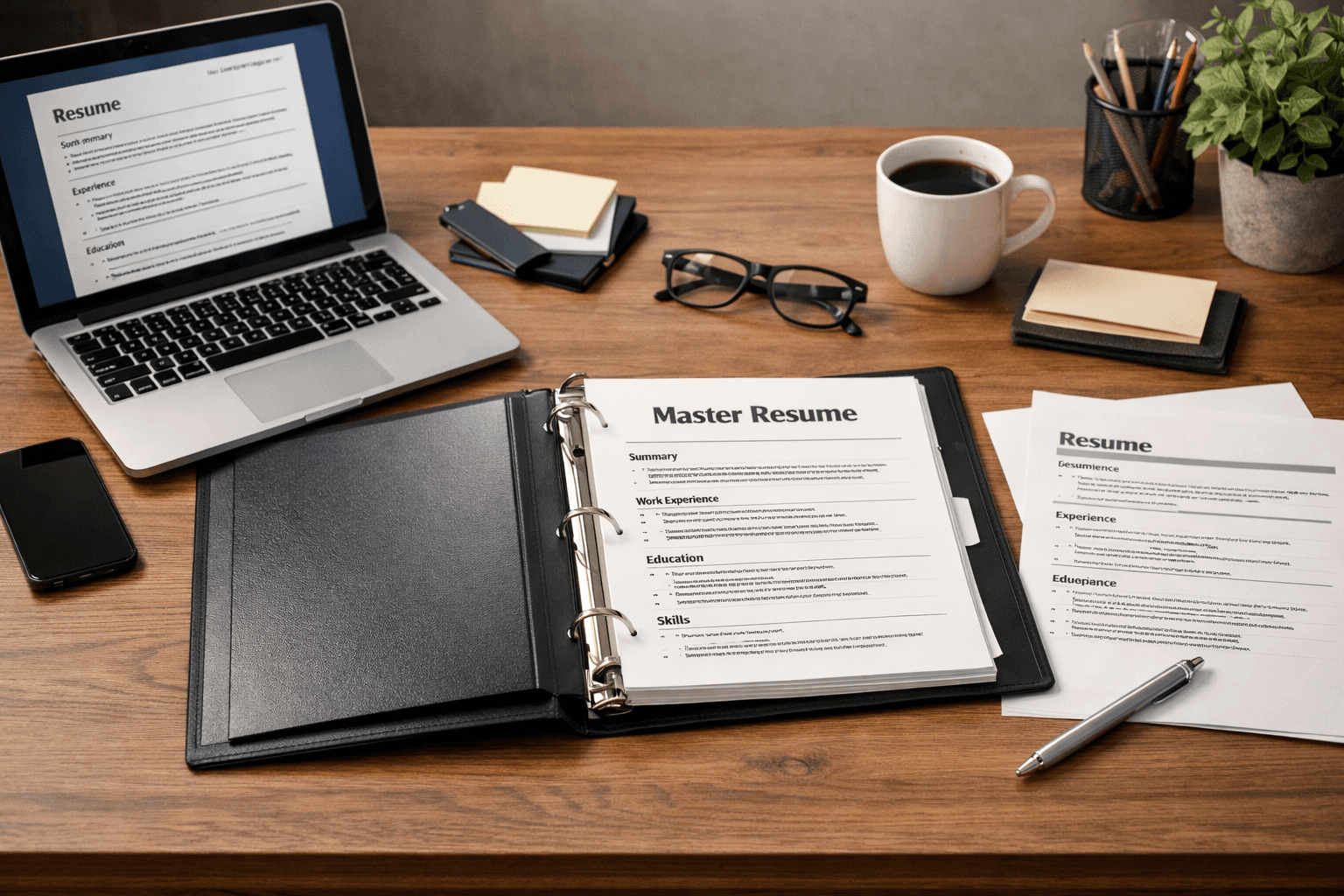
This is where a “Master Resume” changes everything. It’s not the polished one-page document you send to employers. It’s the behind-the-scenes foundation—a comprehensive, organized record of everything you’ve done and achieved.
In this article, you’ll learn how to build a practical, repeatable Master Resume system that helps you tailor applications faster, stay organized, and dramatically increase your chances of landing interviews.

What Is a “Master Resume” (And What It’s Not)
A Master Resume is more than just a document; it’s a comprehensive, unfiltered record of everything you’ve done professionally. It includes all your experience, metrics, skills, projects, certifications, and impact statements. It also contains keywords relevant to your industry and target roles, making it a personal database you can reference anytime you create tailored resumes.
It is NOT:
– A 5-page resume you send to employers
– A static document that you update once a year
Think of it like a career journal. Instead of trying to recall metrics or achievements weeks or months later, you log them immediately after completing a project. For example, if you led a project that increased website traffic by 35%, you write it down right away with details about your role, tools used, and measurable impact. Later, this information can be pulled into multiple tailored resumes or used for interview prep.
To put it simply, a single generic resume is static and often incomplete, while a Master Resume System is dynamic, organized, and continually updated. It allows you to quickly adapt your resume for different job postings without starting from scratch, improving both efficiency and interview chances.
Table: Generic Resume vs Master Resume System
Feature | Generic Resume | Master Resume System |
|---|---|---|
Length | 1–2 pages | Comprehensive, unlimited |
Customization | Low, one-size-fits-all | High, tailored for each role |
Update Frequency | Rare, once per year | Ongoing, after each achievement |
Interview Impact | Moderate | High, supports tailored stories |
Step 1 – Build Your Achievement Inventory (The Core Engine)
Building your Achievement Inventory is the foundation of a Master Resume system. This step is crucial because it captures everything that proves your value, making future tailoring and interview preparation much easier.
Brain Dump Everything
Start by dumping all your professional experiences onto a single document. Include:
– Roles, internships, freelance projects, volunteer work, and leadership positions
– Tools, platforms, and certifications relevant to your field
– Coursework or special projects if you are early in your career
The goal is to collect everything without worrying about length or formatting. Think of it as creating a raw library of your achievements.
Turn Duties Into Impact Statements
Raw lists are not enough. Transform each duty into an impact statement using the formula:
Action + Skill + Context + Measurable Result
Examples:
Before: “Managed social media accounts.”
After: “Managed social media accounts, increasing follower engagement by 42% over six months through targeted content strategy.”
Before: “Assisted in project reporting.”
After: “Compiled and analyzed weekly project reports, reducing reporting errors by 25% and accelerating decision-making for the management team.”
Quantify Relentlessly
Numbers give your achievements credibility, improve ATS keyword density, and catch recruiter attention. Metrics can include:
– Revenue growth percentage
– Time saved on processes
– Engagement increases or retention improvements
– Error reduction or efficiency gains
Document these metrics as precisely as possible; vague statements are easily ignored.
Once your master resume inventory is complete, tools like Sensei AI’s AI Playground can help you refine these impact statements or test them for behavioral interview answers, ensuring your achievements are framed clearly and effectively for potential employers.
Try Sensei AI for Free
Step 2 – Organize It Like a Searchable Database
As your Master Resume grows, organization becomes essential. Without structure, finding relevant achievements can feel like searching for a needle in a haystack, slowing down resume tailoring and interview prep.
Method A: Category-Based Sections
Divide your inventory into logical categories such as Leadership, Technical Skills, Projects, and Analytics. This allows you to quickly locate accomplishments in each domain when targeting specific job requirements.
Method B: Tagging System
Use tags to mark achievements with keywords like “PM,” “Data,” “Growth,” or “Operations.” Tags make it easy to filter and pull relevant examples for each job application, especially when multiple roles require overlapping skill sets.
Method C: Achievement Bank Spreadsheet
For a more structured approach, create a spreadsheet to track each accomplishment. This acts as a dynamic, searchable database.
Table: Example Achievement Tracking Sheet
Role | Project | Skill Used | Metric | Keywords | Relevance Tags |
|---|---|---|---|---|---|
Marketing Analyst | Social Campaign Launch | SEO, Analytics | 35% engagement increase | SEO, Campaign, Growth | Marketing, Data |
Software Engineer | Backend Optimization | Python, SQL | 25% faster query time | Optimization, Database | Tech, Efficiency |
Project Coordinator | Internal Audit Project | Project Management | 15% reduction in errors | Audit, Leadership, Risk | Operations |
This organized system makes tailoring resumes much faster. Instead of spending two hours reworking bullet points, you can identify, copy, and reorder achievements in 10–15 minutes, dramatically improving efficiency while keeping content precise and relevant.
Step 3 – Create Targeted Resume Versions in Under 30 Minutes
Once your Master Resume is organized, creating tailored versions for each job becomes a streamlined process. The goal is to quickly produce a focused resume that aligns perfectly with the job description while maintaining clarity and impact.
Analyze the Job Description
Start by carefully reviewing the job posting.
– Highlight repeated keywords that indicate the employer’s priorities
– Identify required skills versus preferred skills to determine which achievements to emphasize
– Notice phrasing patterns and terminology, as mirroring these can help your resume pass ATS filters
Match and Pull From Master Resume
Use your Master Resume as a resource bank.
– Copy only relevant achievements that directly align with the job description
– Reorder bullet points to place the most critical accomplishments at the top
– Mirror the job posting’s keywords naturally to improve ATS matching and recruiter readability
Trim to 1 Page (or 2 for Senior Roles)
Focus on brevity and clarity. Even if your Master Resume is comprehensive, each tailored version should emphasize only the most relevant achievements. For senior roles, two pages are acceptable, but prioritize impact over volume.
Tailored resumes do more than just improve your application—they set the stage for interviews because your stories are already aligned with the role’s expectations. Tools like Sensei AI (second mention) can reference the uploaded resume and role details in real time during interviews, providing grounded answers that reflect your tailored achievements without generic responses.
Practice with Sensei AI
Step 4 – Maintain the System (So You Never Start From Scratch Again)
Maintaining your Master Resume is just as important as building it. Adopting a Weekly 10-Minute Update Rule ensures your achievements are captured promptly, keeping your system accurate and actionable.
After completing a major project or task, log:
– What you did – summarize your responsibilities and initiatives
– Tools used – software, platforms, or methodologies applied
– Measurable outcome – metrics, percentages, or tangible results
– Challenges solved – obstacles overcome and how you addressed them
This simple habit has a compounding effect on your career. As your achievement inventory grows, you’ll notice faster resume tailoring, stronger interview stories, and a clearer picture of your progress over time. Professionals who track accomplishments regularly report having an easier time negotiating salaries and preparing for promotions because they have immediate, concrete evidence of their impact.
Additionally, keeping your Master Resume updated makes your LinkedIn profile alignment effortless. By periodically reviewing and syncing key achievements, your online professional presence stays accurate and compelling, reinforcing your credibility to recruiters and peers alike. This ensures that both digital and offline applications reflect the same strong narrative of your career growth.
Advanced Layer – Turning Your Master Resume Into Interview Stories
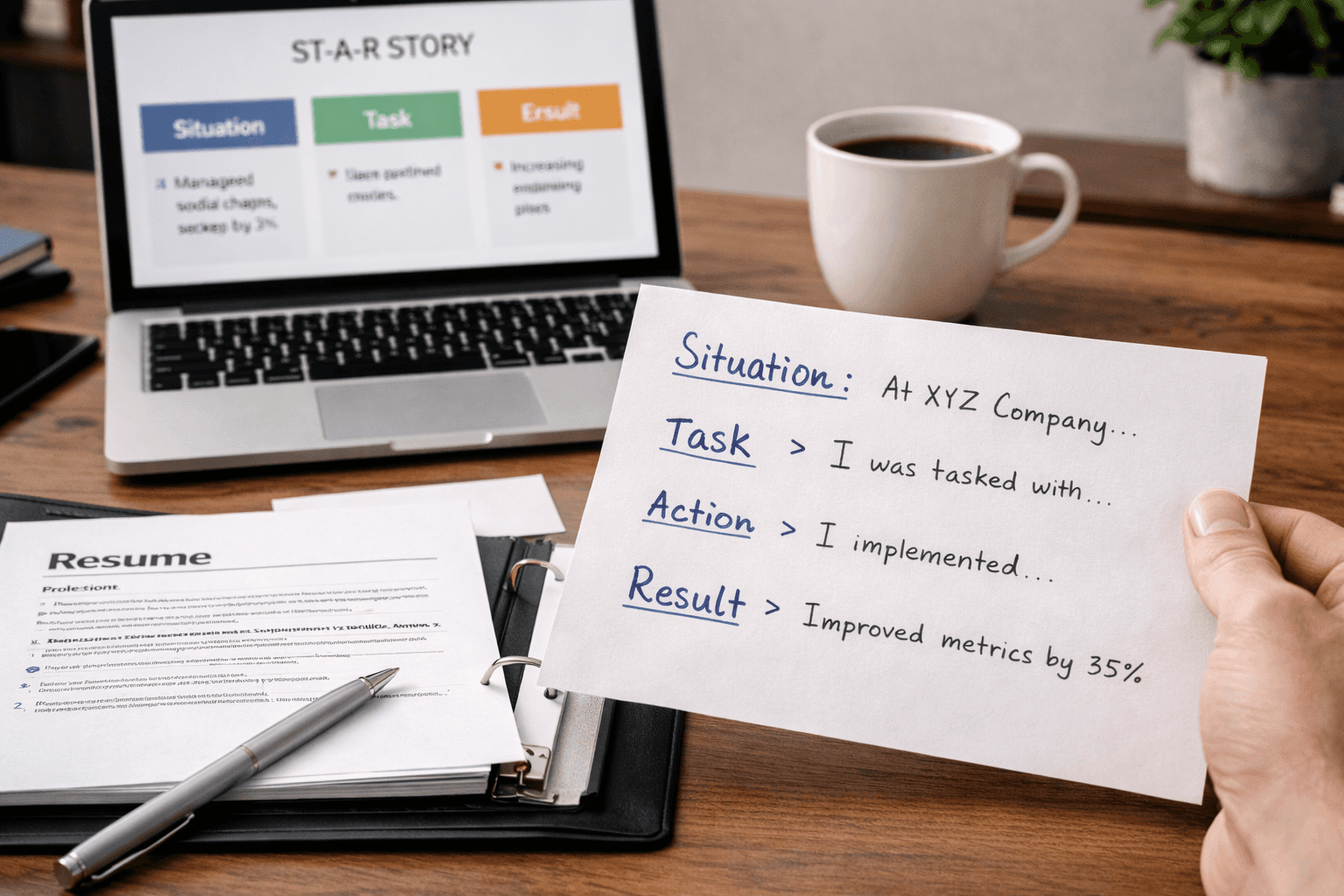
Your Master Resume is not just a tool for tailoring applications—it’s a foundation for interview storytelling. Each strong bullet point should be convertible into a STAR story (Situation, Task, Action, Result), helping you communicate your impact clearly and confidently.
Convert Bullet Points to STAR
Take a bullet point from your resume and expand it into a STAR story.
Example:
Resume bullet: “Managed social media campaigns, increasing engagement by 35%.”
STAR story: “In my previous role at XYZ Company (Situation), I was tasked with improving social media engagement (Task). I implemented a content calendar and ran targeted ad campaigns (Action), which led to a 35% increase in engagement over six months (Result).”
Pre-Build Behavioral Angles
Prepare stories in advance across common behavioral categories:
– Leadership – moments where you guided teams or initiatives
– Conflict – resolving disagreements or competing priorities
– Failure – learning experiences that improved performance
– Ownership – taking initiative and responsibility for results
– Data-driven decision – using metrics or analysis to influence outcomes
Technical Roles
For technical positions, map achievements to coding projects, system designs, or analytical work. Highlight the technologies used, the problem-solving process, and measurable results. This ensures you can discuss projects in-depth and align answers with interviewer expectations.
Having a well-built Master Resume enhances real-time interview tools. With Sensei AI (third and final mention), the system listens to interviewer questions and references your uploaded resume, providing answers that are more personalized and relevant to your actual experiences. This approach ensures your STAR stories remain grounded in reality and aligned with your professional achievements.
Try Sensei AI Now!
Common Mistakes That Kill Resume Systems
Even the best Master Resume system can fail if certain mistakes are made. Here are the most common pitfalls to avoid:
Treating Master Resume as Final Resume
Some people assume that once their Master Resume is built, it’s finished. In reality, it should be continuously updated and refined. Failing to do so means achievements and skills may be missing when tailoring resumes or preparing for interviews.
Not Updating Metrics
Without current metrics, your resume loses credibility. For example, leaving an old performance statistic on your resume instead of a recent, more impressive result can make your accomplishments seem stagnant.
Copy-Paste Without Keyword Alignment
Copying bullet points from the Master Resume without checking if they match the job description can hurt ATS performance. Keywords need to be mirrored thoughtfully to match each role.
Over-Optimizing for ATS and Sounding Robotic
While passing ATS filters is important, overloading your resume with keywords can make it sound unnatural. Recruiters need readable, engaging content that communicates real impact.
Forgetting Human Readability
Even a perfectly optimized resume fails if it’s hard to read. Use clear formatting, concise sentences, and logical order to make sure achievements are quickly understandable within the recruiter’s 6–8 second skim.
By avoiding these mistakes, you maintain a system that not only works for applications but also strengthens your interview preparation and career storytelling.
Your Resume Should Be a System, Not a Document
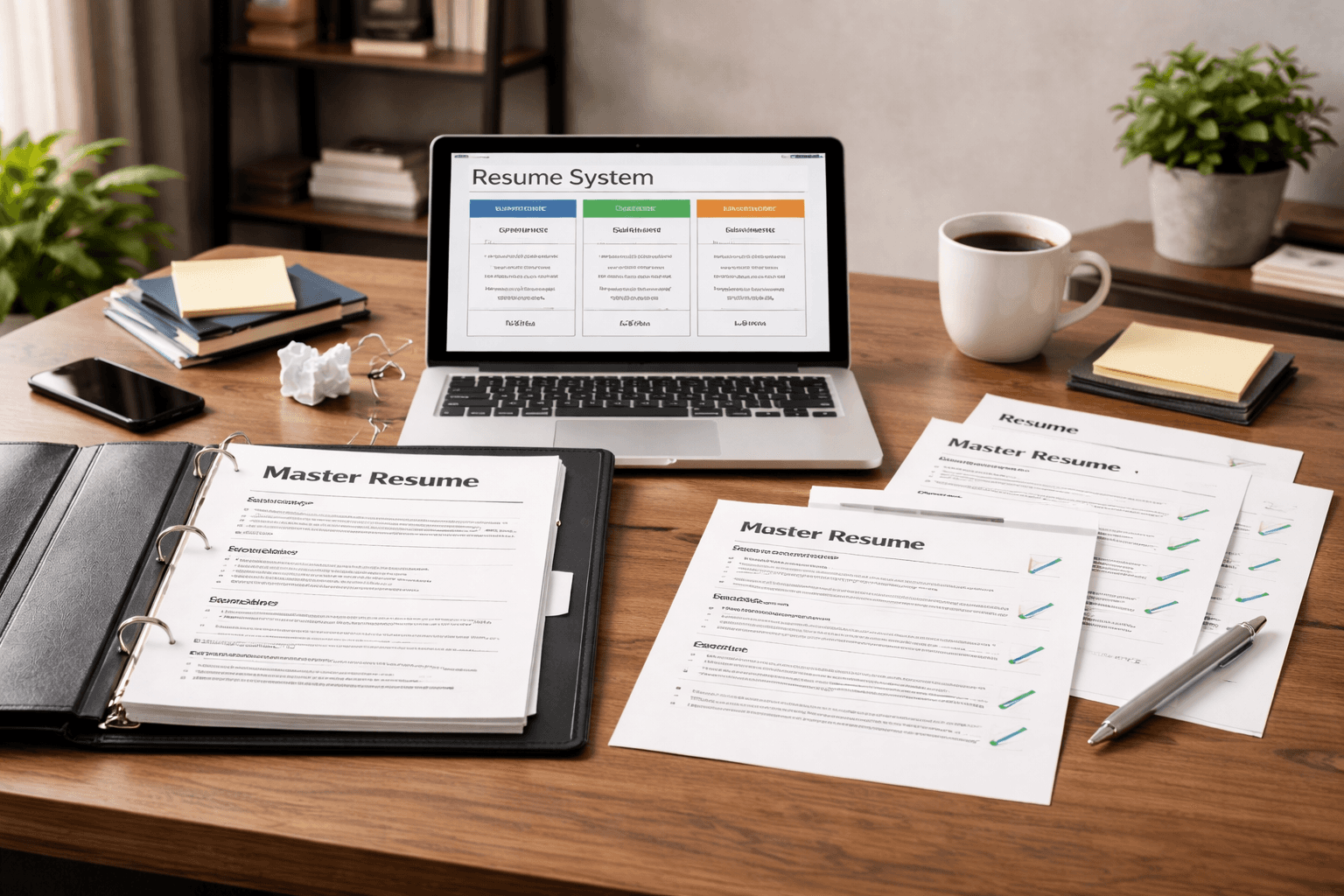
A generic resume often produces random results. You might get lucky with a few interviews, but without a system, success is inconsistent and unpredictable. In contrast, a Master Resume system creates repeatable, reliable outcomes because it organizes your achievements, metrics, and skills in a way that can be tailored quickly for any opportunity.
Building your Master Resume might seem like extra work at first, but the payoff is significant. Once your system is in place, you can produce targeted resumes in minutes, prepare strong interview stories effortlessly, and keep a clear record of your career growth.
Take action this week: start logging your achievements, structuring your experience, and quantifying results. By treating your resume as a living system rather than a static document, you gain control over your career trajectory, increase your chances of landing interviews, and empower yourself to communicate your professional value with confidence. Your future self—and future employers—will thank you.
FAQs
How to write a resume that will get you an interview?
To write a resume that actually gets interviews, focus on relevance, clarity, and measurable results.
• Tailor your resume to the job description
Use the same keywords and skills mentioned in the job posting. ATS systems scan for these terms to determine whether your resume matches the role.
• Use clear sections and simple formatting
Stick to standard headings like “Work Experience,” “Education,” and “Skills.” Avoid complex layouts, graphics, or columns that ATS systems may not parse correctly.
• Show measurable achievements
Instead of writing responsibilities, highlight impact. For example:
“Managed a sales team” → “Led a 6‑person sales team and increased quarterly revenue by 28%.”
• Use strong action verbs
Start bullet points with verbs like built, led, improved, optimized, or launched to make accomplishments clearer.
• Keep it concise
Most resumes should be 1 page (entry-level) or 2 pages (experienced professionals). Recruiters usually scan resumes for only a few seconds.
When your resume clearly shows relevant skills, measurable results, and clean formatting, your chances of getting an interview increase significantly.
Is 87% a good ATS score?
Yes, 87% is considered a strong ATS score and usually means your resume closely matches the job description.
Industry benchmarks suggest that:
• 70–79% → average match
• 80–89% → strong match
• 90%+ → excellent match
Recruiters generally consider 80% or higher a good score because it means your resume includes most of the required keywords and qualifications.
However, an ATS score is not the final hiring decision. The system simply filters resumes before a human recruiter reviews them. Even with a high score, your resume still needs to demonstrate real achievements and relevant experience.
Is a 70% ATS score good?
A 70% ATS score is usually considered acceptable but not very competitive.
Many companies use ATS filters to narrow down large applicant pools, and resumes around 70% may pass the basic screening but still miss important keywords or skills.
Typical interpretation of ATS scores:
70–79% → decent match but may need improvement
80–89% → strong match
90%+ → excellent match
If your score is around 70%, you can often improve it by:
• Adding relevant skills from the job description
• Aligning your job titles with the role
• Including measurable achievements
• Fixing formatting issues
Small changes like adding missing keywords or clarifying achievements can increase the score significantly.
How to get 90+ ATS score?
Getting a 90+ ATS score requires aligning your resume closely with the job description while keeping it natural and readable.
Here are the most effective strategies:
• Match keywords from the job description
Identify required skills, tools, and certifications and include them in your resume where relevant.
• Use the exact job title when appropriate
If the role is “Product Marketing Manager,” using similar wording in your experience section can improve matching.
• Avoid complicated formatting
ATS systems work best with simple layouts. Use standard fonts, clear headings, and single-column structure.
• Quantify your achievements
Numbers and metrics help both ATS systems and recruiters understand your impact.
• Customize your resume for every application
ATS scores depend on how closely your resume matches a specific job description. The same resume might score 85% for one role and 65% for another.
The goal is not to “game” the ATS but to clearly present your relevant skills and experience.

Shin Yang
Shin Yang est un stratégiste de croissance chez Sensei AI, axé sur l'optimisation SEO, l'expansion du marché et le support client. Il utilise son expertise en marketing numérique pour améliorer la visibilité et l'engagement des utilisateurs, aidant les chercheurs d'emploi à tirer le meilleur parti de l'assistance en temps réel aux entretiens de Sensei AI. Son travail garantit que les candidats ont une expérience plus fluide lors de la navigation dans le processus de candidature.
En savoir plus
Série de tutoriels : Présentation de notre nouvelle extension Chrome Listener
Learning Velocity: The Career Skill That Matters More Than GPA
How to Build a “Master Resume” System That Actually Gets You Interviews
The Most In-Demand Soft Skills in an AI-Driven Job Market (2026 Edition)
Can AI Predict Your Interview Questions? A Practical Guide for Job Seekers in 2026
Portfolio Interviews: When Work Matters More Than Words
What Do Data Scientist Interviews Really Look Like? A Step-by-Step Breakdown
What Career Will Be in Demand in 2026? (A Practical Guide to Future-Proof Jobs)
Top Skills That Will Be Most Valuable in 2026 (And How to Start Building Them Now)
Why Career Paths Are Getting Shorter (And Interviews Harder) in 2026
Sensei AI
hi@senseicopilot.com