
La grande question : Quel métier sera porteur en 2026 ?
Si vous avez parcouru les sites d'emploi ces derniers temps, vous l'avez probablement ressenti : l'incertitude. Les gros titres parlent d'automatisation, d'intelligence artificielle remplaçant les travailleurs, de licenciements dans le secteur de la technologie et de pans entiers de l'industrie « bouleversés » du jour au lendemain. Il est légitime de se demander si la carrière que vous construisez aujourd'hui existera encore dans quelques années.
La réalité est que le marché du travail évolue plus vite que jamais. L'intelligence artificielle transforme les processus de travail, simplifie les tâches répétitives et modifie la manière dont les entreprises recrutent. Mais elle n'élimine pas tous les rôles. Au contraire, elle les façonne à nouveau. De nombreux postes évoluent, ils ne disparaissent pas.
En 2026, les employeurs recherchent des qualités spécifiques : l'adaptabilité, l'aisance avec la technologie et un solide jugement humain. Ils veulent des professionnels capables de penser de manière critique, de communiquer clairement et de travailler aux côtés de systèmes intelligents, et non de rivaliser avec eux.
Et voici un point important : « porteur » ne signifie pas uniquement codage ou ingénierie. La santé, les métiers qualifiés, l'énergie verte et la stratégie numérique connaissent tous une croissance rapide.
Dans ce guide, nous allons détailler les carrières à la croissance la plus rapide, les compétences qui les sous-tendent et la manière de vous positionner pour 2026.

Qu'est-ce qui rend une carrière « en demande » en 2026 ?
Lorsque les gens demandent si une carrière est « en demande », ils pensent généralement à une chose : les entreprises recrutent-elles activement pour ce poste — et continueront-elles à le faire dans un avenir proche ? Mais la véritable demande va au-delà des offres d'emploi. Elle reflète des changements structurels dans l'économie, la démographie et la technologie.
Données sur l'embauche et signaux de croissance
Selon le rapport du Forum économique mondial sur l'avenir des emplois 2023, les employeurs s'attendent à des changements importants dans la demande de compétences d'ici 2025 et au-delà. Les rôles liés à l'IA, aux données, à la durabilité et aux plateformes numériques devraient connaître une croissance rapide. Dans le même temps, les pénuries de main-d'œuvre dans le secteur de la santé et les métiers qualifiés persistent dans de nombreux pays.
Plusieurs forces à long terme tirent cette tendance :
Projections de croissance de l'industrie liées à l'IA, à la cybersécurité et à l'énergie verte
Pénuries persistantes de main-d'œuvre dans la santé et les infrastructures
Transformation numérique continue dans presque tous les secteurs
Vieillissement de la population augmentant la demande pour les rôles médicaux et de soutien
Intégration de l'IA dans la finance, le marketing, la logistique et les opérations
Il ne s'agit pas de pics d'embauche à court terme, mais de tendances structurelles.
Trois signaux indiquant qu'une carrière va se développer
Premièrement, elle résout un problème moderne, tel que les risques de sécurité liés à l'IA, le changement climatique ou les systèmes de santé surchargés.
Deuxièmement, elle requiert du jugement humain, de la créativité ou une prise de décision complexe. L'automatisation gère les tâches ; les humains gèrent les nuances.
Troisièmement, elle combine la culture technique avec des compétences commerciales ou de communication. Les professionnels hybrides sont de plus en plus précieux.
La demande, cependant, n'est qu'un côté de l'équation. Se faire embaucher dans ces domaines nécessite une solide préparation.
Des outils comme Sensei AI sont conçus pour soutenir les candidats confrontés à des entretiens de plus en plus techniques et comportementaux. Il écoute les questions de l'intervieweur en temps réel et génère des réponses sur mesure basées sur votre CV et les détails fournis, vous aidant à répondre avec plus d'assurance sous la pression.
Essayez Sensei Ai gratuitement
Top 10 des métiers qui seront les plus demandés en 2026
Les carrières suivantes ne sont pas des prédictions aléatoires ou des hashtags à la mode. Elles reposent sur des données d'embauche, des rapports sur les perspectives sectorielles, des statistiques gouvernementales sur l'emploi et des mutations structurelles à long terme telles que l'adoption de l'IA, les politiques climatiques, les pénuries de personnel de santé et la transformation numérique. Bien qu'aucune prévision ne soit parfaite, ces rôles apparaissent régulièrement dans de nombreux rapports mondiaux comme des catégories à forte croissance. Si vous réfléchissez à l'endroit où investir votre temps, votre formation et votre énergie, ces domaines représentent un positionnement solide pour 2026 et au-delà.
Ingénieur en IA / Machine Learning
Les ingénieurs en IA restent au cœur de la transformation numérique. Des entreprises de la finance, de la santé, de la vente au détail et de la logistique intègrent le machine learning dans leurs produits et opérations. Les salaires moyens varient souvent de 120 000 $ à 180 000 $ selon la région et l'expérience. De solides compétences en Python, la connaissance du déploiement de modèles et les fondamentaux de l'ingénierie des données sont essentiels.
Analyste en cybersécurité
Alors que les menaces basées sur l'IA deviennent de plus en plus sophistiquées, la demande en cybersécurité continue de croître. Le travail à distance a élargi les surfaces d'attaque, augmentant l'exposition aux risques des entreprises. Les salaires varient généralement de 90 000 $ à 140 000 $. Les compétences en détection des menaces, en sécurité cloud et en cadres de conformité sont très valorisées.
Analyste de données / Data Scientist
Les entreprises s'appuient de plus en plus sur des décisions basées sur les données plutôt que sur l'intuition. Les professionnels des données traduisent les informations brutes en perspectives exploitables. Les salaires varient de 85 000 $ à 150 000 $. SQL, la modélisation statistique et les outils de business intelligence sont des compétences clés.
Professionnels de la santé (Infirmiers, Spécialistes de la télésanté)
Le vieillissement de la population et les pénuries de main-d'œuvre favorisent un recrutement soutenu dans le secteur de la santé. La télésanté a élargi l'accès tout en augmentant la demande de professionnels agréés. La rémunération varie considérablement selon les pays, mais les pénuries garantissent une grande sécurité d'emploi.
Ingénieur en énergies renouvelables
Les engagements climatiques et les réglementations ESG accélèrent les projets d'infrastructures vertes. L'expertise dans le solaire, l'éolien et le stockage sur batterie est de plus en plus précieuse. Les salaires varient souvent de 80 000 $ à 130 000 $, selon la spécialisation et la région.
Chef de produit (Produits Tech & IA)
À mesure que les outils d'IA s'intègrent dans les produits de consommation et d'entreprise, des chefs de produit qualifiés sont nécessaires pour aligner la technologie avec les besoins des utilisateurs. Les salaires dépassent fréquemment 110 000 $. La pensée stratégique, la recherche utilisateur et la maîtrise technique sont essentielles.
Ingénieur Cloud / Ingénieur DevOps
Les organisations continuent de migrer leurs infrastructures vers les plateformes cloud. Les professionnels du DevOps garantissent l'évolutivité, la fiabilité et l'automatisation. Les salaires se situent généralement entre 100 000 $ et 160 000 $. Une expertise sur AWS, Azure ou Google Cloud est indispensable.
Stratège en marketing numérique
Les outils d'IA n'ont pas éliminé les rôles marketing — ils les ont rendus plus complexes. L'interprétation des données, la stratégie d'acquisition payante et le positionnement de la marque restent essentiels. Les salaires varient de 70 000 $ à 120 000 $.
Professionnels de la santé mentale
La sensibilisation post-pandémie a accru la demande de thérapeutes, de conseillers et de spécialistes de la santé mentale. Les exigences en matière de licences créent des barrières d'accès élevées mais garantissent également une stabilité à long terme.
Métiers qualifiés (Électriciens, Techniciens de fabrication avancée)
Les modernisations d'infrastructures, l'électrification et les initiatives de relocalisation stimulent la demande pour les métiers qualifiés. Bien que souvent négligés, de nombreux rôles offrent des revenus solides et un risque d'automatisation plus faible.
Métier | Pourquoi il se développe | Niveau de compétences requis | Adapté au télétravail ? | Potentiel salarial |
|---|---|---|---|---|
Ingénieur en IA / ML | Adoption de l'IA dans tous les secteurs | Élevé | Oui | Très élevé |
Analyste en cybersécurité | Augmentation des cybermenaces | Moyen-Élevé | Oui | Élevé |
Analyste / Scientist de données | Prise de décision basée sur les données | Moyen | Oui | Élevé |
Professionnel de la santé | Vieillissement de la population et pénuries | Élevé (Licence requise) | Limité | Stable-Élevé |
Ingénieur en énergies renouvelables | Politiques climatiques et ESG | Moyen-Élevé | Partiel | Élevé |
Chef de produit | Intégration de l'IA dans les produits | Moyen-Élevé | Oui | Très élevé |
Ingénieur Cloud / DevOps | Modernisation des infrastructures | Élevé | Oui | Élevé |
Stratège en marketing numérique | Complexité du marketing optimisé par l'IA | Moyen | Oui | Moyen-Élevé |
Professionnel de la santé mentale | Sensibilisation accrue | Élevé (Licence requise) | Partiel | Stable |
Métiers qualifiés | Modernisation des infrastructures | Moyen | Non | Moyen-Élevé |
Les compétences derrière ces métiers (il ne s’agit pas seulement de coder)
Même si vous n’envisagez pas de devenir ingénieur logiciel, la sensibilisation technique n’est plus facultative. En 2026, la plupart des rôles interagissent d’une manière ou d’une autre avec des systèmes numériques, des outils d’IA ou des plateformes de données. La différence entre les professionnels moyens et performants dépend souvent de leur aisance à travailler aux côtés de la technologie — et de leur capacité à l’associer à un solide jugement humain.
Les compétences techniques qui comptent en 2026
Les carrières qui connaissent la croissance la plus rapide partagent un socle technique commun. Il ne s’agit pas nécessairement de compétences approfondies en ingénierie, mais de compétences pratiques et appliquées :
Maîtrise de l’IA (comprendre le fonctionnement des outils d’IA, leurs limites et leur valeur ajoutée)
Interprétation des données (lecture de tableaux de bord, extraction d’informations, esprit d’analyse de base)
Sensibilisation à la cybersécurité (reconnaître les risques, comprendre les bases de la protection des données)
Outils d’automatisation (plateformes de flux de travail, assistants IA, systèmes basés sur le cloud)
Certifications spécifiques à l’industrie (titres cloud, licences de santé, conformité ESG, etc.)
Ces compétences signalent que vous pouvez opérer efficacement dans des environnements modernes plutôt que de résister au changement.
Les compétences humaines qui prennent de la valeur
Parallèlement, l’automatisation augmente la valeur des forces proprement humaines :
Prise de décision dans des situations incertaines
Pensée structurée lors de la résolution de problèmes complexes
Communication sous pression, en particulier lors d’entretiens ou de rôles face aux clients
Adaptabilité au fur et à mesure de l’évolution des industries
Jugement éthique lors du travail avec des systèmes d’IA ou des données sensibles
Les entretiens devenant plus structurés et techniques, la préparation gagne elle aussi en importance.
Certains candidats utilisent des outils comme Sensei AI pour obtenir une assistance en temps réel pendant les entretiens. Il détecte automatiquement les questions de l’interlocuteur et génère des réponses basées sur le CV du candidat, ce qui peut s’avérer particulièrement utile lors des entretiens comportementaux et techniques.
Entraînez-vous avec Sensei Ai
Carrières susceptibles de décliner ou de se transformer
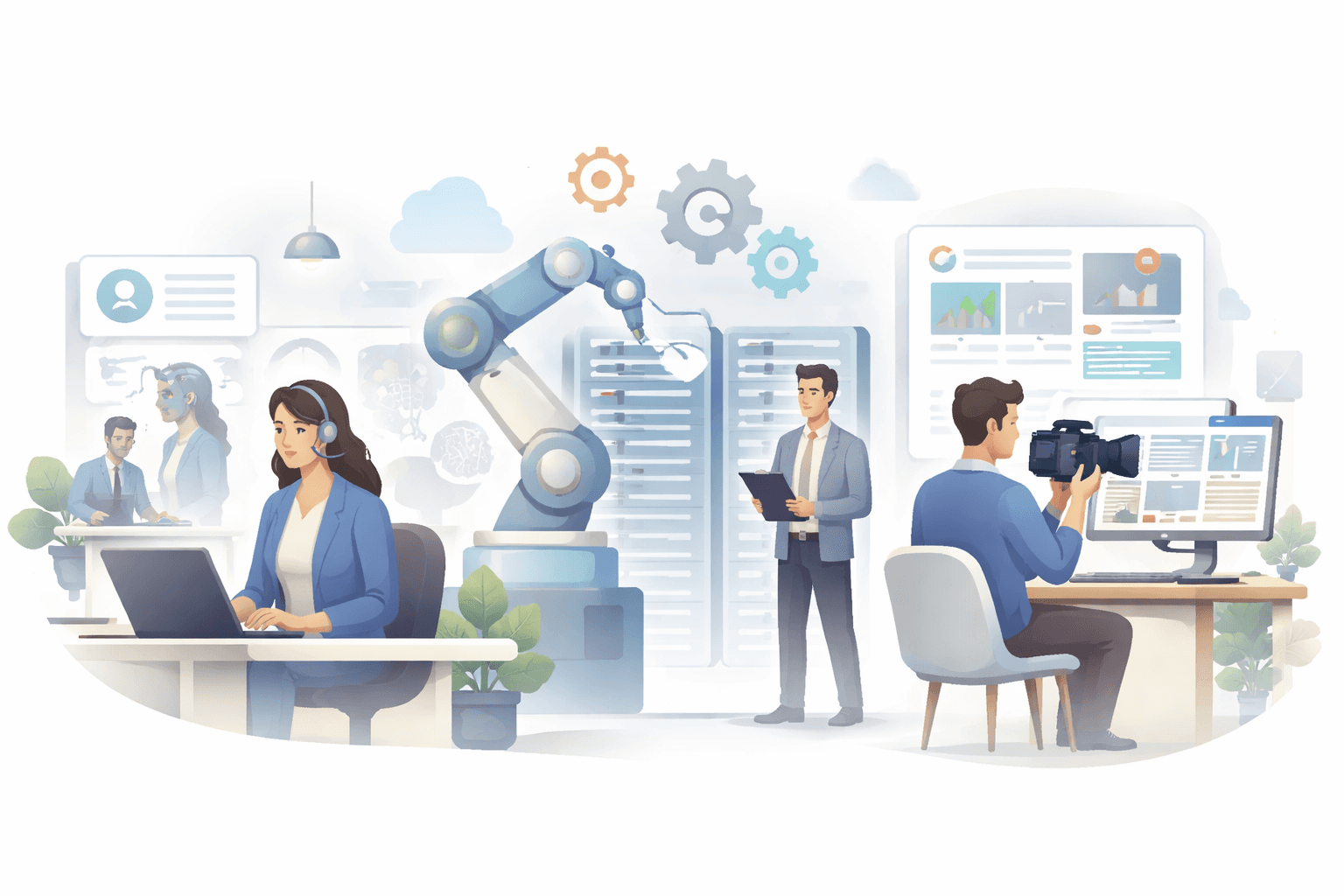
Tous les parcours professionnels n'évoluent pas à la même vitesse. Certains rôles subissent la pression de l'automatisation, des outils d'IA et des plateformes numériques. Cependant, il est important d'aborder cela de manière réaliste : le déclin ne signifie pas toujours la disparition. Le plus souvent, il s'agit d'une transformation.
Les rôles administratifs de routine sont de plus en plus soutenus par des systèmes d'automatisation des flux de travail qui gèrent la planification, le traitement des documents et la coordination interne. Les postes de saisie de données de base sont particulièrement vulnérables, car l'IA peut traiter et catégoriser de grands volumes d'informations bien plus rapidement que les humains.
Les rôles simples de service à la clientèle évoluent également. Les chatbots et les assistants d'IA gèrent désormais les demandes courantes, les réinitialisations de mots de passe et le suivi des commandes. Cela dit, les cas complexes ou émotionnellement sensibles nécessitent toujours des représentants humains dotés d'empathie et de discernement.
Les rôles dans les médias traditionnels sans compétences numériques ont été remodelés par la publication en ligne, les stratégies de contenu axées sur l'analyse de données et les outils de production alimentés par l'IA. Les professionnels qui s'adaptent aux plateformes numériques continuent de trouver des opportunités.
Le changement de perspective clé est le suivant : ces emplois ne disparaissent pas, ils évoluent. Les travailleurs qui améliorent leurs compétences, intègrent la technologie dans leur flux de travail et développent des forces humaines complémentaires restent compétitifs, même dans des secteurs en pleine mutation.
Comment choisir la bonne carrière pour vous (cadre pratique)
Choisir une carrière pour 2026 ne consiste pas à courir après le salaire le plus élevé ou le titre le plus tendance. Il s'agit d'une question d'alignement — entre vos points forts, la demande du marché et la viabilité à long terme. Une approche structurée permet de réduire les incertitudes et d'éviter des réorientations coûteuses par la suite.
Étape 1 – Évaluer les compétences transférables
Commencez par identifier ce que vous apportez déjà. La communication, l'esprit d'analyse, la coordination de projet, le leadership ou l'exposition technique peuvent être transférés d'un secteur à l'autre. Notez les réussites mesurables de vos rôles passés. Souvent, les compétences que vous sous-estimez sont celles que les employeurs apprécient le plus.
Étape 2 – Faire correspondre avec les industries en croissance
Ensuite, comparez vos points forts avec des secteurs en pleine expansion tels que l'IA, la santé, la cybersécurité, l'énergie verte ou les services numériques. Recherchez des points de convergence plutôt que de repartir de zéro. Par exemple, un professionnel du marketing peut évoluer vers le marketing produit de l'IA sans pour autant devenir ingénieur.
Étape 3 – Tester avant de s'engager
Avant d'investir des années dans une reconversion, expérimentez :
Projets en freelance
Certifications
Micro-certifications en ligne
Création de portfolio
De petits tests apportent de la clarté sans risque majeur.
Étape 4 – Se préparer à des entretiens compétitifs
Même dans les secteurs à forte croissance, les exigences d'embauche augmentent. Les évaluations techniques, les études de cas et les évaluations comportementales sont plus structurées que jamais. La préparation compte désormais autant que les qualifications.
Certains candidats utilisent l'AI Playground de Sensei AI pour s'entraîner aux questions d'entretien dans un format textuel. Son copilote d'entretien en temps réel écoute les questions de l'interviewer et génère instantanément des réponses basées sur votre CV, tandis que l'AI Editor peut vous aider à rédiger un CV à partir des détails que vous fournissez.
Essayez Sensei Ai maintenant !
Attentes salariales en 2026
Les attentes salariales en 2026 varieront considérablement en fonction du niveau d'expérience, du secteur d'activité, de l'emplacement géographique et de la spécialisation. Les professionnels débutants gagnent généralement beaucoup moins que les employés de niveau intermédiaire, mais l'écart se réduit plus rapidement dans les secteurs à forte croissance. Dans des domaines tels que l'IA, la cybersécurité et l'ingénierie cloud, les talents de niveau intermédiaire peuvent gagner de 40 à 70 % de plus que les recrues débutantes en quelques années, en raison de la rareté des compétences.
Les différences sectorielles restent également importantes. Les rôles technologiques offrent souvent des salaires de départ plus élevés, en particulier dans les logiciels et les infrastructures. Les rôles dans le secteur de la santé offrent une stabilité et une demande constante, bien que les exigences en matière de licences puissent retarder le potentiel de gain. Les métiers qualifiés, bien que parfois négligés, voient leurs salaires augmenter en raison des pénuries de main-d'œuvre et des investissements dans les infrastructures.
La normalisation des salaires à distance est un autre facteur. Les entreprises ajustent de plus en plus la rémunération en fonction de la situation géographique, ce qui signifie que les travailleurs entièrement à distance peuvent voir des grilles salariales standardisées plutôt que des primes spécifiques à la ville. Cependant, des différences régionales de rémunération subsistent. L'Amérique du Nord et certaines parties de l'Europe de l'Ouest offrent généralement des rémunérations plus élevées que les marchés émergents, même pour des rôles similaires.
Catégorie de carrière | Niveau débutant | Niveau intermédiaire | Perspectives de croissance |
|---|---|---|---|
Technologie (IA, Cloud, Cybersécurité) | 80 000 $–120 000 $ | 120 000 $–180 000 $ | Très forte |
Santé | 60 000 $–90 000 $ | 90 000 $–130 000 $ | Forte |
Métiers qualifiés | 45 000 $–70 000 $ | 70 000 $–100 000 $ | Stable-Forte |
Marketing numérique | 50 000 $–75 000 $ | 75 000 $–120 000 $ | Modérée-Forte |
Dans la plupart des secteurs, la croissance des salaires suit la spécialisation des compétences. Plus votre expertise devient technique, rare ou transversale, plus votre potentiel de gain s'accentue avec le temps.
L'IA va-t-elle remplacer ces carrières ?
C'est l'une des craintes les plus courantes sur le marché du travail actuel : si l'IA continue de progresser, ces carrières à forte croissance vont-elles disparaître elles aussi ? La réponse la plus réaliste est que l'IA remplace des tâches, et non des professions entières. L'automatisation prend en charge les processus répétitifs, la reconnaissance des formes et les flux de travail gourmands en données. Les humains continuent de diriger la stratégie, l'interprétation, la créativité et la prise de décision éthique.
En fait, bon nombre des postes les mieux rémunérés en 2026 consisteront à superviser, intégrer ou concevoir des systèmes d'IA. Les ingénieurs les construisent. Les chefs de produit les alignent sur les besoins des utilisateurs. Les analystes interprètent leurs résultats. Même les professionnels de la santé et des métiers spécialisés utilisent de plus en plus des outils assistés par l'IA plutôt que de rivaliser avec eux.
Les carrières dites « à l'épreuve de l'IA » sont rarement isolées de la technologie. Au contraire, elles associent une conscience technique à un solide jugement humain. Les professionnels qui comprennent comment travailler aux côtés de systèmes intelligents deviennent plus précieux, et non moins.
Le but n'est pas de dépasser l'IA. C'est de s'adapter avec elle. Ceux qui perfectionnent continuellement leurs compétences, restent curieux et adoptent de nouveaux outils resteront compétitifs dans des secteurs en constante évolution.
Réflexions finales : comment rester très demandé au-delà de 2026

En 2026, la carrière la plus sûre ne sera pas un poste spécifique. Ce sera un ensemble de compétences. Les rôles peuvent changer, les industries peuvent évoluer et les technologies vont certainement progresser. Ce qui reste durable, c'est votre capacité à combiner la culture technique avec la résolution de problèmes, la communication et un jugement sûr.
L'apprentissage continu importe désormais plus que n'importe quel diplôme unique. Les certifications, les micro-accréditations, les projets pratiques et l'expérience transfonctionnelle se cumulent au fil du temps. Les professionnels qui restent pertinents sont ceux qui considèrent l'apprentissage comme une habitude permanente plutôt que comme une réussite ponctuelle.
Développez votre sensibilité technique. Renforcez vos compétences humaines. Préparez-vous de manière stratégique plutôt que de réagir au hasard des tendances. Si vous vous concentrez sur l'adaptabilité plutôt que sur la peur, vous serez en mesure de faire face aux changements à venir.
L'avenir appartient à ceux qui s'adaptent plus vite que les industries ne changent.
FAQ
Quelle est la meilleure carrière dans laquelle s'orienter en 2026 ?
La « meilleure » carrière en 2026 concilie sécurité de l'emploi, potentiel de croissance et adaptabilité aux changements induits par l'IA. Les carrières qui associent le jugement humain, la créativité et les compétences technologiques sont d'excellentes candidates :
Métiers de la santé – médecins, infirmiers, techniciens spécialisés
Spécialistes des énergies vertes – techniciens solaires/éoliens, responsables du développement durable
Métiers liés aux données et à l'IA – data scientists, ingénieurs ML, professionnels de l'analyse
Métiers de la stratégie digitale et du produit – chefs de produit, designers UX, marketeurs digitaux
Métiers manuels qualifiés avec intégration technologique – électriciens, techniciens CVC, maintenance en robotique
Ces carrières sont moins susceptibles d'être entièrement automatisées et bénéficient de l'apport de l'IA.
Quels emplois seront les plus demandés en 2026 ?
Les emplois les plus demandés seront généralement ceux qui ne peuvent pas être facilement automatisés et qui requièrent une combinaison de connaissances techniques et de compétences humaines :
Santé et services d'assistance
Spécialistes de l'IA et du machine learning
Ingénieurs et techniciens en énergies vertes
Stratèges en marketing digital et e-commerce
Experts en cybersécurité et infrastructures informatiques
Métiers manuels qualifiés avec intégration technologique
Les employeurs privilégieront l'adaptabilité, la culture technologique et de solides compétences en résolution de problèmes.
Quel secteur va connaître un essor en 2026 ?
Plusieurs secteurs devraient connaître une croissance rapide en 2026 en raison des tendances technologiques, sociétales et environnementales :
Santé et biotechnologies – vieillissement de la population et innovation médicale
Énergies renouvelables et développement durable – adoption des énergies vertes
Technologie et services d'IA – automatisation, cloud computing et outils d'IA
E-commerce et services numériques – vente en ligne, marketing digital
Cybersécurité – à mesure que l'utilisation des données et de l'IA augmente dans tous les secteurs
La croissance favorisera les secteurs qui intègrent l'IA sans pour autant remplacer totalement les rôles humains.
Quelles seront les 5 compétences les plus demandées en 2026 ?
Les compétences clés que les employeurs rechercheront en 2026 associent connaissances techniques et aptitudes humaines :
Adaptabilité et apprentissage continu – capacité à évoluer au rythme des fonctions
Culture numérique et collaboration avec l'IA – compréhension des outils et systèmes d'IA
Esprit critique et résolution de problèmes – prise de décisions que l'IA ne peut pas entièrement automatiser
Communication et collaboration – travail d'équipe clair, persuasif et transversal
Compétences techniques spécialisées – codage, analyse de données, expertise en santé ou savoir-faire en énergies renouvelables
Les professionnels qui maîtriseront à la fois la technologie et les compétences humaines bénéficieront de la meilleure résilience professionnelle.

Shin Yang
Shin Yang est un stratégiste de croissance chez Sensei AI, axé sur l'optimisation SEO, l'expansion du marché et le support client. Il utilise son expertise en marketing numérique pour améliorer la visibilité et l'engagement des utilisateurs, aidant les chercheurs d'emploi à tirer le meilleur parti de l'assistance en temps réel aux entretiens de Sensei AI. Son travail garantit que les candidats ont une expérience plus fluide lors de la navigation dans le processus de candidature.
En savoir plus
Série de tutoriels : Présentation de notre nouvelle extension Chrome Listener
Sensei AI vs Interviewing.io: Which Interview Tool Is Better for You in 2026?
Sensei AI vs Huru: Which AI Interview Tool Is Better in 2026?
Sensei AI vs Interview Warmup: Which Interview Practice Tool Is Better in 2026?
How Recruiters Detect AI Answers (and How to Stay Authentic)
Interview Copilot vs Traditional Interview Coaching: Which Is Better for Your Next Interview?
Best AI for Behavioral Interview Questions: 9 Tools to Practice Smarter in 2026
Google Interview Warmup Alternatives: 9 Best Tools to Practice for Interviews in 2026
How to Practice for an Interview by Yourself: A Step-by-Step Guide That Actually Works
Best AI Tools for Job Seekers in 2026
Sensei AI
hi@senseicopilot.com