

Why Keyword Stuffing No Longer Works in 2026
Many job seekers still believe the fastest way to pass an applicant tracking system is to repeat phrases such as project management, team player, or Excel as many times as possible. That strategy came from an earlier era of hiring software, when some systems relied heavily on direct keyword matching. If a job description mentioned a phrase several times, candidates often tried to mirror it repeatedly in their resumes.
That approach is becoming outdated. In 2026, many hiring platforms use smarter methods such as semantic search, contextual matching, and relevance scoring. Instead of simply counting how often a word appears, these systems may look at whether your experience, achievements, tools, and responsibilities genuinely connect to the role.
Old Resume Logic
Older ATS systems often rewarded exact keyword repetition. A resume with the phrase marketing manager repeated multiple times could sometimes rank higher, even if the content was weak.
New Resume Logic
Modern systems care more about meaning. They look for evidence of skill, related terminology, measurable outcomes, and real experience. They may understand that grew pipeline revenue relates to sales performance, even if the wording is different.
Quick Example
Candidate A repeats marketing 15 times.
Candidate B writes: Managed paid search campaigns, improved CTR by 27 percent, and increased qualified leads by 34 percent.
Candidate B is stronger because the resume shows real work, clear results, and practical skills. It helps both recruiters and software understand actual value.
Keyword stuffing can now make resumes feel unnatural to human readers and less useful to systems designed to understand context instead of repetition.

What Semantic Search Means for Your Resume
Semantic search sounds technical, but the idea is simple. Instead of matching only exact words, hiring software tries to understand intent, relationships, and meaning. It looks beyond whether your resume repeats the same phrase and asks a smarter question: does this candidate appear qualified for the role?
For example, a job post may ask for customer retention. Your resume can still perform well even if you never use that exact phrase. Strong related language may include:
Improved renewal rates
Reduced churn
Built loyalty campaigns
Managed customer lifecycle programs
These phrases describe outcomes connected to retention, so modern systems may recognize them as relevant. That means you can write naturally while still matching the role.
Exact Keyword vs Related Meaning
Job Post Phrase | Resume Language That Still Matches |
|---|---|
Leadership | Managed team of 8 |
Data analysis | Built dashboards in Excel and SQL |
Sales growth | Increased revenue by 23 percent |
Semantic search often connects concepts instead of demanding identical wording. If a company wants someone analytical, showing reporting, dashboards, forecasting, or process improvement can support that need.
This is good news for candidates. You no longer need robotic repetition or awkward keyword stuffing to look relevant. A clear, evidence-based resume is usually stronger than one packed with buzzwords.
The same principle often appears in interviews: specific examples beat vague claims. Sensei AI users practicing responses often find that stronger stories outperform generic phrases. Its AI Playground can help turn weak resume language into clearer, achievement-based talking points.
Try Sensei AI for Free
Signs Your Resume Is Still Written for Old ATS Systems
Many resumes are not weak because the candidate lacks experience. They are weak because they were built for outdated hiring software. If your resume feels repetitive, vague, or unnatural, it may still be following old ATS logic instead of modern search standards.
Common Warning Signs
You repeat the same keyword too many times across multiple sections.
You list skills without proof or measurable examples.
You copy lines from the job description word for word.
Your bullet points describe duties instead of outcomes.
Your wording sounds stiff or unnatural when read aloud.
A modern resume should sound like a capable professional, not a machine trying to trigger filters.
Before and After Example
Before: Responsible for project management and project management reporting.
After: Led 6 cross-functional projects and delivered all milestones on time.
The second version is stronger because it shows ownership, scale, and results. It gives both software and recruiters something meaningful to evaluate.
Why This Matters
Recruiters often skim resumes in seconds before deciding whether to continue reading. If your content is hard to scan, repetitive, or unclear, strong experience can be missed. Searchability matters, but readability matters just as much.
The best resumes balance both: clear language for humans and relevant signals for smarter systems.
How to Optimize for Intent Instead of Saturation
If keyword stuffing is outdated, what should replace it? The better strategy is optimizing for intent. That means understanding what the employer actually needs, then proving you can deliver it with clear examples. Use the framework below when rewriting your resume.
Step 1
Identify the real hiring need behind each keyword. Many phrases in job descriptions are broad shortcuts. For example, communication skills may really mean handling client calls, leading presentations, writing updates, or aligning stakeholders across teams.
Step 2
Mirror important terms naturally once or twice where they genuinely fit. If a posting values project management, mention project ownership in your summary or experience section, but avoid forcing the phrase into every bullet point.
Step 3
Support each skill with evidence. Claims alone are weak. Replace adjectives with actions, scope, and outcomes.
Instead of leadership, write: Managed 5 associates across two shifts.
Instead of analytical, write: Reduced reporting time by 40 percent using Excel automation.
Step 4
Use related terminology and tool names. Semantic systems often connect associated skills, so practical details help. Examples include CRM platforms, Salesforce, SQL, Tableau, stakeholder management, forecasting, onboarding, or budget planning.
Step 5
Quantify impact whenever possible. Numbers make achievements easier to trust and easier to compare. Use percentages, revenue gains, time saved, customer growth, team size, deadlines met, or error reduction.
Quick Example
Weak bullet point: Improved operations.
Strong bullet point: Streamlined inventory workflow, reducing stock errors by 18 percent and saving 6 hours weekly.
Why This Works
This method improves both ATS relevance and recruiter interest because it shows capability instead of empty labels.
After your resume is ready, interview preparation should follow the same evidence-based style. Sensei AI helps candidates answer interviewer questions in real time by referencing their resume and uploaded background information, making responses more specific and consistent.
Practice with Sensei AI
Resume Sections That Matter Most for Semantic Matching
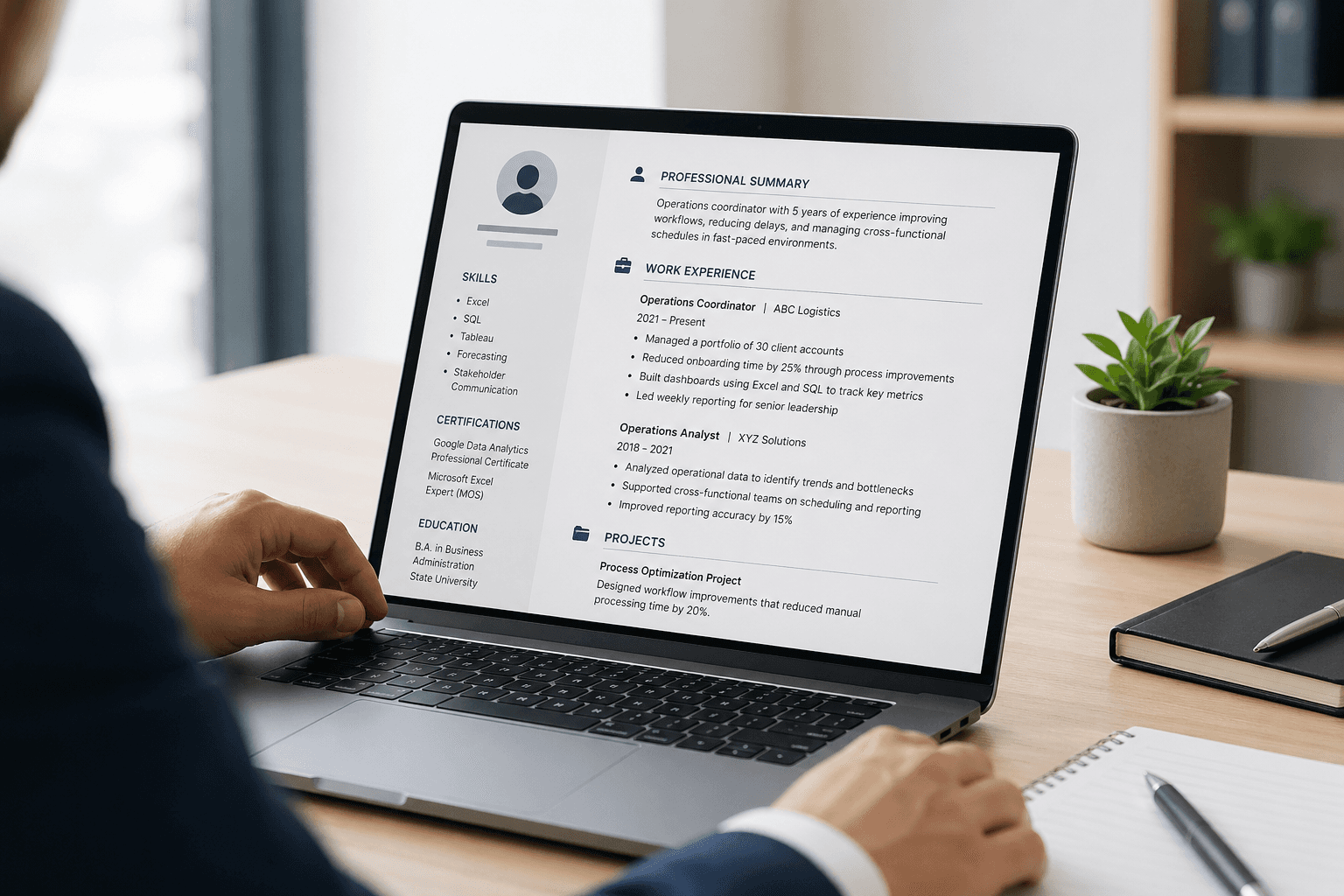
Not every part of a resume carries the same weight. Semantic matching systems often look across the full document, but some sections send stronger meaning signals than others. Instead of obsessing over one keyword list, build consistency throughout the resume.
Professional Summary
Use 2 to 3 lines that quickly show role fit, experience level, and measurable strengths. This section helps create first impressions for both recruiters and software.
Example: Operations coordinator with 5 years of experience improving workflows, reducing delays, and managing cross-functional schedules in fast-paced environments.
A strong summary should be specific, relevant, and easy to scan.
Work Experience
This is usually the most important section. It shows whether you have actually done the work. Focus on results, tools, scope, ownership, and measurable outcomes.
Good examples include:
Managed a portfolio of 30 client accounts
Reduced onboarding time by 25 percent
Built dashboards using Excel and SQL
Led weekly reporting for senior leadership
Skills Section
Keep this section concise and relevant. Prioritize skills that match the target role rather than listing every platform you have touched. Group related skills when useful.
Example: Excel, SQL, Tableau, Forecasting, Stakeholder Communication.
Projects / Certifications
These sections are especially valuable for career changers, recent graduates, and technical candidates. Projects can demonstrate practical ability when formal experience is limited. Certifications can reinforce specialized knowledge.
Why Consistency Matters
Semantic systems often rely on multiple signals across sections, not just one phrase repeated several times. If the same skill appears in your summary, work history, and achievement examples, credibility rises.
That is how resumes become both searchable and convincing.
Real Example — Keyword Stuffed Resume vs Semantic Resume
The easiest way to understand the difference between old resume tactics and modern optimization is to compare two versions side by side. Both candidates want the same digital marketing role, but they present themselves very differently.
Version A
Digital marketing specialist with marketing skills, SEO skills, marketing campaigns, social media marketing, communication skills, branding skills, content marketing knowledge, team player mindset, and strong passion for marketing.
This version repeats related words but says very little. It lists labels without proof and gives no sense of level, impact, or actual responsibilities.
Version B
Digital marketer with 4 years of experience running paid search, SEO content strategy, and email funnels. Increased qualified leads by 38 percent and reduced cost per acquisition by 21 percent. Managed campaign reporting in Google Analytics and collaborated with sales on lead quality improvements.
This version is stronger immediately because it gives real signals that both recruiters and modern systems can understand.
Why Version B Wins
Advantage | Why It Matters |
|---|---|
Clear context | Shows the candidate’s actual field and experience level |
Specific tools | Mentions SEO, email funnels, Google Analytics |
Business outcomes | Includes lead growth and cost reduction |
Natural language | Reads like a professional summary, not a keyword list |
Recruiter-friendly | Easy to scan quickly and remember |
Version B also creates trust. Numbers, tools, and responsibilities make the claims believable.
The Bigger Lesson
Semantic optimization improves more than ATS visibility. It also improves human response rates because hiring managers prefer resumes that explain value clearly. A strong resume should sound like someone ready to solve problems, not someone trying to trick software.
Common Mistakes Job Seekers Make Right Now
Many resumes underperform not because candidates lack ability, but because avoidable mistakes weaken relevance and credibility. Even strong experience can be hidden behind poor resume choices.
Using One Resume for Every Job
Sending the same resume everywhere is common, but risky. Different roles prioritize different skills, tools, and outcomes. A resume for sales should not read the same as one for operations or marketing.
Overloading Hidden Keywords in White Text
Some applicants still paste keywords in tiny white font or hidden sections. This tactic looks manipulative, can break formatting, and may be flagged by modern systems.
Listing Every Tool Ever Used
Long skill lists create noise. Naming every platform you touched once does not help if the tools are not relevant to the target role. Prioritize what matters most.
Ignoring Industry Language
Each field has its own vocabulary. Finance, healthcare, software, and retail often describe similar skills differently. If your wording misses industry language, relevance may drop.
Using Generic AI-Written Phrases Without Editing
Statements like results-driven professional or dynamic team player appear everywhere. If AI-generated text is not personalized, it sounds empty and forgettable.
Why This Matters
Recruiters can usually spot vague or inflated language quickly. They want evidence, clarity, and fit. A focused resume with specific achievements will almost always outperform one filled with filler words and shortcuts.
How to Use AI the Smart Way for Resume Writing
AI can be a useful resume assistant, but it works best as a tool, not a substitute for judgment. Strong resumes still need truthful details, role relevance, and human editing. The smartest approach is using AI to improve communication while keeping your real experience at the center.
Good Uses of AI
Rewrite weak bullet points into clearer achievement statements
Translate routine duties into business impact
Tailor wording toward a specific target role
Improve grammar, flow, and readability
Suggest stronger action verbs or cleaner formatting
For example, Handled customer emails can become Resolved 40 plus weekly customer requests while maintaining high satisfaction scores.
Bad Uses of AI
Inventing experience, metrics, or certifications
Overusing clichés like results-driven professional
Copying generic summaries without editing
Applying with content that does not match your history
Letting AI remove your natural voice completely
Recruiters often notice when resumes sound polished but empty. If every sentence is vague, trust drops quickly.
Best Practice
Use AI in layers. First, provide accurate information about your roles, tools, and wins. Next, ask for cleaner wording or stronger bullet points. Then review everything manually for truth, tone, and relevance.
A Practical Option
While Sensei AI is primarily built for real-time interview support, its AI Editor can also help users generate a resume draft from provided information. That draft should still be refined carefully so the final version is accurate, specific, and tailored to the role you want.
Try Sensei AI Now!
Final Checklist Before You Apply

Before sending your resume, do one final review. Small improvements at this stage can make a meaningful difference in both ATS performance and recruiter response.
Quick Checklist
Does the resume clearly match the target role and industry?
Are important keywords included naturally instead of repeated awkwardly?
Do your achievements include numbers, percentages, or measurable outcomes?
Does each bullet point show an action plus a result?
Can a recruiter understand your value within 10 seconds of scanning?
Does the language sound human, confident, and specific?
Are the most relevant tools, skills, and accomplishments easy to find?
Is formatting clean, consistent, and easy to read?
Have you removed filler phrases and vague claims?
Is every statement accurate and defensible in an interview?
Final Thought
The best resumes today are not built to game software. They are built to communicate value clearly and quickly.
Semantic search rewards clarity, proof, and relevance. Strong resumes are no longer about stuffing words—they are about showing what you can actually do.
FAQs
What are the 3 C's of a resume?
The 3 C’s of a resume refer to Clarity, Conciseness, and Consistency:
Clarity: Your resume should be easy to read and understand. Use simple language, clear headings, and logical structure so recruiters can quickly grasp your value.
Conciseness: Keep it brief and relevant. Avoid unnecessary details—focus only on achievements and experiences that align with the job.
Consistency: Maintain uniform formatting, tense, font style, and bullet structure throughout the document to create a professional impression.
What is keyword stuffing in a resume?
Keyword stuffing is the practice of excessively repeating job-related keywords in your resume in an unnatural way to try to “game” Applicant Tracking Systems (ATS).
Instead of improving your chances, it often backfires because:
It makes your resume sound robotic and hard to read
Recruiters can easily spot it
Modern ATS systems prioritize context and relevance, not just frequency
A better approach is to use keywords naturally within meaningful achievements and responsibilities.
What are the 5 golden rules of resume writing?
The 5 golden rules of resume writing help ensure your resume is effective and competitive:
Tailor your resume for each job
Customize content based on the job description instead of sending the same resume everywhere.Focus on achievements, not duties
Show impact using results (e.g., “increased sales by 25%”), not just responsibilities.Use keywords strategically
Incorporate relevant skills and terms from the job posting naturally.Keep formatting clean and professional
Use clear headings, bullet points, and consistent spacing for readability.Keep it concise (1–2 pages max)
Prioritize the most relevant and recent information.
How to uncover keywords in job postings and write attention grabbing resumes?
To identify the right keywords and craft a compelling resume, follow this process:
1. Analyze multiple job postings
Look at 3–5 similar roles and identify repeated terms in:
Skills (e.g., “data analysis,” “project management”)
Tools (e.g., “Excel,” “Python”)
Soft skills (e.g., “communication,” “leadership”)
2. Pay attention to frequency and placement
Keywords that appear in:
Job titles
Requirements section
Responsibilities section
are usually the most important.
3. Match keywords with your real experience
Don’t just copy—integrate them into your achievements:
Weak: “Responsible for project management”
Strong: “Led cross-functional project management initiatives, delivering projects 20% ahead of schedule”
4. Use variations and related terms
Modern systems recognize semantic meaning, so include variations (e.g., “data analysis” + “data analytics”).
5. Write for both ATS and humans
Balance is key:
ATS needs keywords
Humans need clear, impactful storytelling
An attention-grabbing resume combines relevant keywords + measurable achievements + clean structure.

Shin Yang
Shin Yang est un stratégiste de croissance chez Sensei AI, axé sur l'optimisation SEO, l'expansion du marché et le support client. Il utilise son expertise en marketing numérique pour améliorer la visibilité et l'engagement des utilisateurs, aidant les chercheurs d'emploi à tirer le meilleur parti de l'assistance en temps réel aux entretiens de Sensei AI. Son travail garantit que les candidats ont une expérience plus fluide lors de la navigation dans le processus de candidature.
En savoir plus
Série de tutoriels : Présentation de notre nouvelle extension Chrome Listener
Sensei AI vs Interviewing.io: Which Interview Tool Is Better for You in 2026?
Sensei AI vs Huru: Which AI Interview Tool Is Better in 2026?
Sensei AI vs Interview Warmup: Which Interview Practice Tool Is Better in 2026?
How Recruiters Detect AI Answers (and How to Stay Authentic)
Interview Copilot vs Traditional Interview Coaching: Which Is Better for Your Next Interview?
Best AI for Behavioral Interview Questions: 9 Tools to Practice Smarter in 2026
Google Interview Warmup Alternatives: 9 Best Tools to Practice for Interviews in 2026
How to Practice for an Interview by Yourself: A Step-by-Step Guide That Actually Works
Best AI Tools for Job Seekers in 2026
Sensei AI
hi@senseicopilot.com