

Why Remote & Hybrid Leadership Matters Today
Remote and hybrid work have rapidly evolved from a short-term solution into a long-term workplace model. What started as an adjustment during global disruptions has now become a permanent part of how many companies operate. Today, it’s common for teams to work across different cities, countries, and time zones, collaborating through digital tools rather than shared office spaces. For organizations, this shift opens access to a wider talent pool and offers employees greater flexibility in how they structure their workdays.
However, while remote work creates new opportunities, it also reshapes the role of leadership. Traditional management approaches were often built around physical presence—quick desk conversations, in-person meetings, and direct observation of daily work. In distributed environments, those interactions don’t happen naturally, which means leaders must be more intentional about how they guide and support their teams.
This article explores practical ways leaders can adapt to this new reality. We’ll cover communication strategies that keep teams aligned, methods for building trust without constant supervision, productivity frameworks that focus on outcomes, and tools that help remote teams collaborate effectively. We’ll also look at how leaders can continue supporting employee growth and career development—even when team members rarely meet face-to-face.
The good news is that remote leadership isn’t a mysterious skill reserved for a few experienced managers. Like any professional skill, it can be learned, practiced, and improved over time with the right mindset and systems in place.
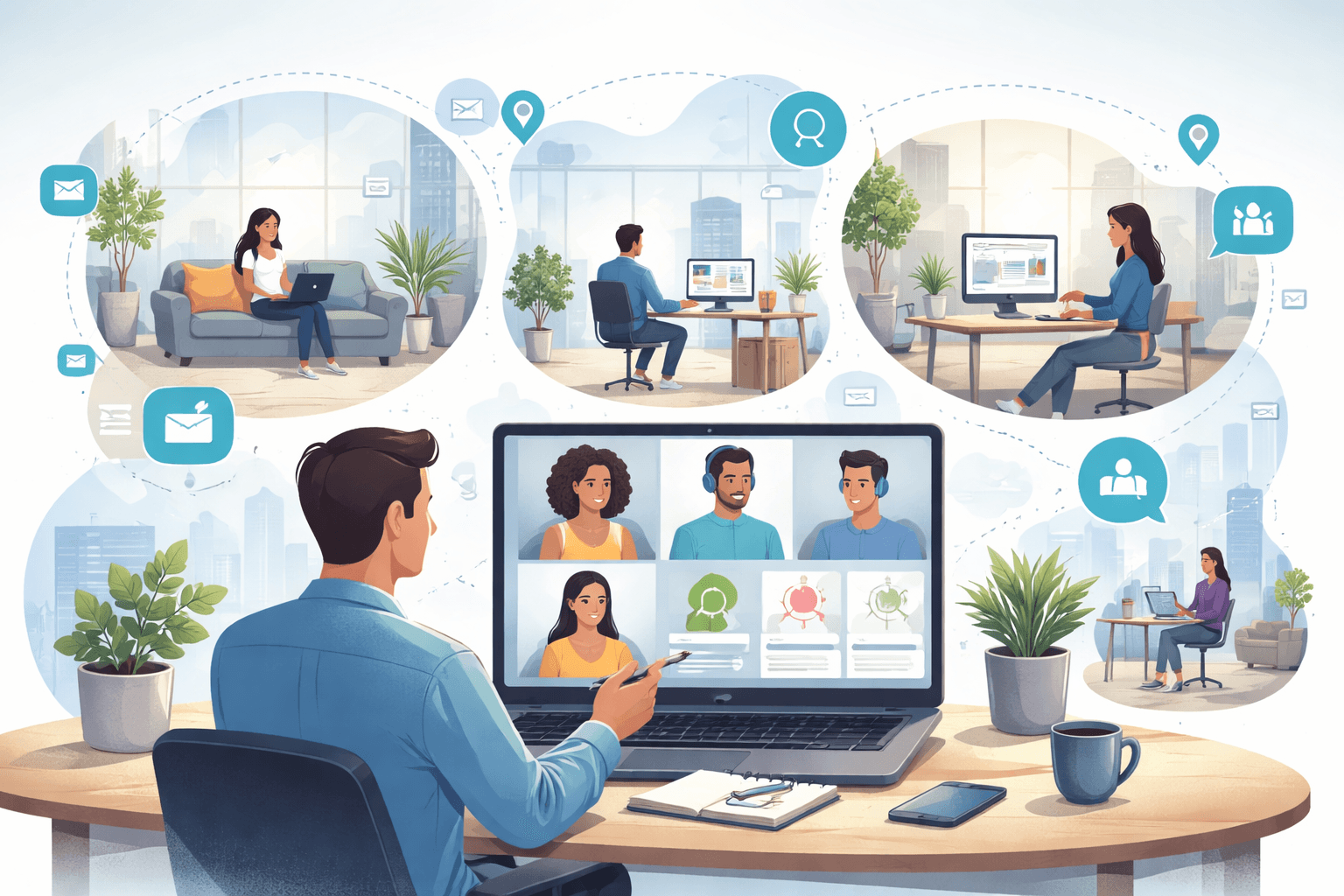
The Key Differences Between Traditional and Remote Leadership
Leading a remote or hybrid team is not simply about managing the same way through video calls. While tools like Zoom or messaging platforms make communication possible, effective remote leadership requires deeper structural changes. Leaders must rethink how teams communicate, collaborate, and measure success when people are no longer sharing the same physical space.
In traditional offices, many important interactions happen naturally—quick updates in the hallway, spontaneous brainstorming sessions, or informal check-ins during the day. In distributed teams, these moments do not occur automatically. As a result, leaders must intentionally design systems that keep everyone informed, aligned, and engaged.
Below is a comparison that highlights how leadership approaches often shift when teams move from traditional offices to remote or hybrid environments.
Leadership Area | Traditional Office Approach | Remote / Hybrid Approach |
|---|---|---|
Communication | Frequent in-person conversations and spontaneous discussions | Structured digital communication using messaging, documentation, and scheduled calls |
Performance Tracking | Visibility based on time spent in the office or observed activity | Focus on measurable outcomes, deliverables, and project milestones |
Team Culture | Built through shared office experiences and informal social interactions | Created intentionally through virtual events, recognition channels, and team rituals |
Meetings | Often ad-hoc or spontaneous due to physical proximity | Planned meetings with clear agendas and documented outcomes |
Employee Visibility | Leaders observe work habits and engagement directly | Visibility comes from updates, shared progress dashboards, and written communication |
Feedback Loops | Feedback happens casually during daily interactions | Regularly scheduled one-on-one meetings and structured feedback sessions |
Because these natural office interactions disappear in distributed environments, remote leaders must intentionally create systems that replace them. Casual hallway updates might become weekly check-ins, while quick desk conversations may shift to documented project updates or asynchronous messages.
Another important change is how performance is evaluated. Instead of measuring productivity by hours spent at a desk, effective remote leaders focus on results, completed milestones, and team contributions.
Ultimately, strong remote leadership depends on three core principles: clarity in expectations, trust in employees, and transparency in communication. When these elements are in place, distributed teams can operate just as effectively—sometimes even more effectively—than traditional office teams.
Building Trust Without Physical Presence
In remote and hybrid teams, trust becomes the foundation of effective collaboration. Unlike traditional offices, leaders cannot simply observe work in progress or rely on physical presence to understand how employees are performing. Instead, trust must replace constant supervision. When employees feel trusted, they are more likely to take ownership of their work, communicate openly, and remain engaged with the team’s goals.
Clear Expectations
One of the simplest ways to build trust is by setting clear expectations. When employees understand what success looks like, they can work independently without feeling uncertain about priorities. Leaders should define measurable goals, clear timelines, and expected outcomes for projects. This clarity reduces confusion and helps team members stay aligned even when they work in different time zones.
Transparency From Leaders
Transparency also plays a major role in building trust. Leaders should openly communicate important updates, business priorities, and decisions that affect the team. When employees understand the bigger picture, they feel more connected to the organization’s direction and more confident in leadership.
Consistent One-on-One Conversations
Regular one-on-one conversations help maintain strong relationships in distributed teams. Short weekly check-ins allow employees to ask questions, share concerns, and receive guidance. These conversations also give leaders a chance to provide feedback and recognize progress.
Research from organizations such as Gallup and Harvard Business Review has shown that employees who receive frequent and meaningful feedback are significantly more engaged at work. In remote environments, these structured touchpoints become even more valuable.
Ultimately, trust in remote teams is built through consistency rather than control. When leaders communicate clearly, remain transparent, and stay connected through regular conversations, teams can work confidently and independently.
Creating Strong Communication Systems for Distributed Teams
One of the most common challenges in remote and hybrid teams is communication. When people are not sharing the same workspace, information no longer spreads naturally through quick conversations or spontaneous updates. Without clear systems, employees may feel disconnected from their teammates or uncertain about project priorities. Strong communication structures help teams stay aligned, reduce confusion, and maintain productivity across locations.
Synchronous vs Asynchronous Communication
Remote teams benefit from understanding the difference between synchronous and asynchronous communication. Synchronous communication happens in real time, such as video calls, live meetings, or instant messaging conversations. These interactions are useful for complex discussions, brainstorming sessions, or decisions that require immediate input.
Asynchronous communication, on the other hand, allows people to respond on their own schedules. Examples include written updates, shared documents, or recorded messages. This approach works especially well for distributed teams working across time zones because it reduces the need for everyone to be online at the same moment.
Documentation Culture
A strong documentation culture is essential for remote collaboration. Teams should consistently record decisions, project plans, and workflow processes in shared documents or knowledge bases. When information is written down and easily accessible, employees can quickly find answers without waiting for someone to respond. Documentation also helps new team members understand how projects and systems work.
Meeting Discipline
Remote teams often benefit from having fewer but more structured meetings. Each meeting should have a clear agenda, defined objectives, and a summary of decisions or next steps afterward. This prevents unnecessary calls while ensuring important discussions still happen effectively.
For example, a distributed product team might start the week with a short virtual standup meeting to review priorities. Throughout the week, team members post progress updates in a shared project document. Designers, engineers, and product managers can review these updates asynchronously and respond when needed. This approach keeps everyone informed without requiring constant meetings.
In remote environments, effective communication is not about sending more messages—it’s about creating intentional systems that help the right information reach the right people at the right time.
Maintaining Productivity Without Micromanagement

Remote work often raises concerns about productivity. Some leaders worry that without direct supervision, employees may become less focused or disengaged. However, multiple studies have shown that well-managed remote teams can be just as productive—or even more productive—than traditional office teams. The key difference is how productivity is measured and supported.
Instead of tracking how many hours someone appears online, effective remote leaders focus on outcome-based management. This approach prioritizes results, milestones, and completed deliverables rather than constant activity monitoring. When expectations are clear and progress is visible, employees can work independently while still contributing to team goals.
Goal Frameworks
One practical method for outcome-based management is using structured goal frameworks. Systems such as Objectives and Key Results (OKRs) or simple weekly deliverables help clarify what needs to be accomplished within a specific timeframe. When employees know exactly what outcomes are expected, they can organize their work more efficiently without needing constant guidance.
Shared Progress Dashboards
Transparency is also essential for maintaining productivity. Shared progress dashboards allow team members and managers to track project updates in real time. These dashboards may include task completion status, project milestones, or weekly progress reports. By making work visible to the entire team, leaders reduce the need for frequent check-ins while still maintaining accountability.
Regular Retrospectives
Another useful practice is holding short retrospectives at the end of projects or work cycles. During these discussions, teams review what worked well, what challenges occurred, and what improvements can be made in the future. These conversations encourage continuous learning and help teams refine their workflows over time.
When employees are trusted to manage their schedules, they often feel a stronger sense of ownership over their work. This autonomy can increase motivation, creativity, and engagement.
Ultimately, productivity in remote teams depends less on supervision and more on clarity, transparency, and well-designed systems that support focused work.
Supporting Employee Growth in Remote Environments
One concern many remote employees share is the fear of becoming “out of sight, out of mind.” In traditional offices, visibility can sometimes influence career opportunities because managers see employees working, contributing in meetings, or collaborating informally. In remote environments, those moments are less visible, which means leaders must be more intentional about supporting employee development and long-term career growth.
Intentional Career Conversations
Managers can start by scheduling dedicated career conversations with team members. Instead of only discussing current tasks or project updates, these conversations focus on long-term goals, professional interests, and future opportunities. Employees should feel comfortable sharing what skills they want to develop or what roles they hope to pursue in the future. When leaders regularly discuss career paths, employees are more likely to stay motivated and engaged.
Skill Development Opportunities
Remote teams also benefit from structured learning opportunities. Organizations can encourage employees to participate in online courses, internal workshops, or mentorship programs that help them build new skills. Because remote workers often manage flexible schedules, digital learning platforms can make it easier to integrate professional development into everyday work routines.
Interview and Career Preparation Support
Even while working remotely, many professionals continue exploring new roles or internal promotions. Preparing for interviews and organizing career materials can sometimes feel challenging without guidance. Tools designed to support job preparation can help employees feel more confident.
For example, Sensei AI is an interview copilot that provides real-time interview assistance to interviewees. It works by listening to interview questions and generating suggested answers by referencing the user’s resume and background information. Resources like this can help professionals better prepare for interviews and approach career opportunities with greater confidence.
By combining regular career conversations, learning opportunities, and preparation resources, leaders can ensure that remote employees continue growing professionally regardless of where they work.
Try Sensei Ai for Free
Building Remote Team Culture That Actually Feels Human
Many leaders worry that remote work erodes company culture. In reality, culture does not disappear—it simply requires more intentional effort. Without deliberate practices, teams can feel disconnected, morale may dip, and engagement can suffer. Remote leaders need to create opportunities for meaningful interactions that reinforce shared values and a sense of community.
Structured Social Interaction
Structured social interactions help bridge the gap created by physical distance. Examples include optional virtual coffee chats, online celebrations for project milestones, or small in-person team meetups when possible. These activities allow team members to connect on a personal level, fostering camaraderie and a sense of belonging.
Recognition and Appreciation
Recognition plays a crucial role in sustaining morale. Highlighting individual or team achievements in shared channels or during virtual meetings reinforces a positive culture. Public appreciation motivates employees and encourages them to continue contributing at a high level.
Psychological Safety
Psychological safety is essential for a thriving remote culture. Employees must feel comfortable sharing ideas, asking questions, and raising concerns without fear of judgment. Creating an environment where open communication is encouraged strengthens team collaboration and innovation.
For example, a remote software company may maintain a weekly “Wins Channel” where employees share successes, learnings, or customer feedback. Additionally, monthly virtual demo days allow teams to present projects and celebrate accomplishments collectively. These small, consistent rituals build culture in ways that go beyond occasional events.
Ultimately, a strong remote culture is built through everyday interactions, thoughtful recognition, and intentional social practices, rather than relying solely on formal company events or policies.
Tools That Help Remote Leaders Stay Organized
Technology plays a critical role in remote leadership. Without physical proximity, leaders and team members rely on digital tools to communicate, track progress, and maintain alignment. The right combination of tools reduces friction, prevents misunderstandings, and ensures that everyone has access to the information they need.
Essential Tool Categories
Tool Category | Purpose / Example |
|---|---|
Communication Tools | Platforms like Slack, Microsoft Teams, or Zoom help teams stay connected through chat, video, and voice communication. |
Project Management Tools | Tools such as Asana, Trello, or Jira allow leaders to assign tasks, track progress, and manage deadlines. |
Documentation Tools | Shared knowledge bases, Google Docs, Confluence, or Notion ensure processes, decisions, and project updates are accessible to all. |
AI Productivity Assistants | AI tools provide guidance on workflow, decision-making, and professional tasks. |
One practical example is Sensei AI’s AI Playground, a text-based AI assistant that can answer questions related to interviews, career development, and workplace challenges. Leaders and employees can use it to quickly get guidance on professional situations, improving preparation and reducing uncertainty without interrupting team workflows.
By combining communication, project management, and documentation tools with intelligent assistants, remote leaders can streamline coordination, enhance visibility, and maintain an organized, productive team environment.
Practice with Sensei Ai
Managing Hybrid Teams Without Creating Two Different Experiences
Hybrid teams, where some employees work in the office and others remotely, introduce unique challenges for leaders. Without careful planning, hybrid setups can create an imbalance in participation, information access, and visibility. Common issues include in-office bias, where office-based employees receive more attention, unequal access to information, and meeting imbalances, where remote participants may feel left out of discussions or decisions.
Default to Remote-Friendly Meetings
One solution is to design all meetings to be remote-friendly by default. Even employees in the office should join from their own laptops so that everyone, whether on-site or remote, has equal footing. This approach ensures full participation and prevents in-office employees from dominating conversations unintentionally.
Equal Documentation
Leaders should insist that all important decisions, updates, and discussions are documented digitally. Shared notes, project updates, and decision logs ensure that no one misses critical information, regardless of their physical location.
Fair Performance Evaluation
Performance evaluations should focus on outcomes rather than presence. Employees should be assessed based on measurable goals, completed projects, and contributions rather than how often they are seen in the office.
In hybrid leadership, creating a balanced experience requires intentional systems that treat remote participation as the default rather than the exception. When these principles are applied consistently, hybrid teams can collaborate effectively and feel equally valued, no matter where they work.
Preparing Remote Employees for Career Opportunities
Even when working remotely, professionals must continue preparing for career advancement and new opportunities. Strong resumes, interview readiness, and clear professional goals remain essential for moving into new roles, whether internally or externally. Remote work should not limit career growth—leaders and employees can adopt proactive strategies to ensure ongoing development.
Resume and Interview Preparation
Maintaining an updated resume is critical. Remote employees should periodically review their achievements, skills, and experience to ensure they are accurately represented. In addition, preparing for interviews—practicing responses, reviewing role requirements, and anticipating questions—can help candidates perform confidently when opportunities arise.
AI Assistance for Career Preparation
Sensei AI provides helpful tools for remote employees seeking career support. Its AI Editor feature can transform user-provided information into structured resume content, simplifying the resume creation process without replacing thoughtful career planning. Employees can use this tool to quickly draft resumes and focus more energy on professional growth and skill development.
By combining proactive resume maintenance, consistent interview preparation, and intelligent tools like Sensei AI, remote employees can stay competitive and ready to seize career opportunities regardless of where they work.
Try Sensei Ai Now!
The Future of Remote & Hybrid Leadership
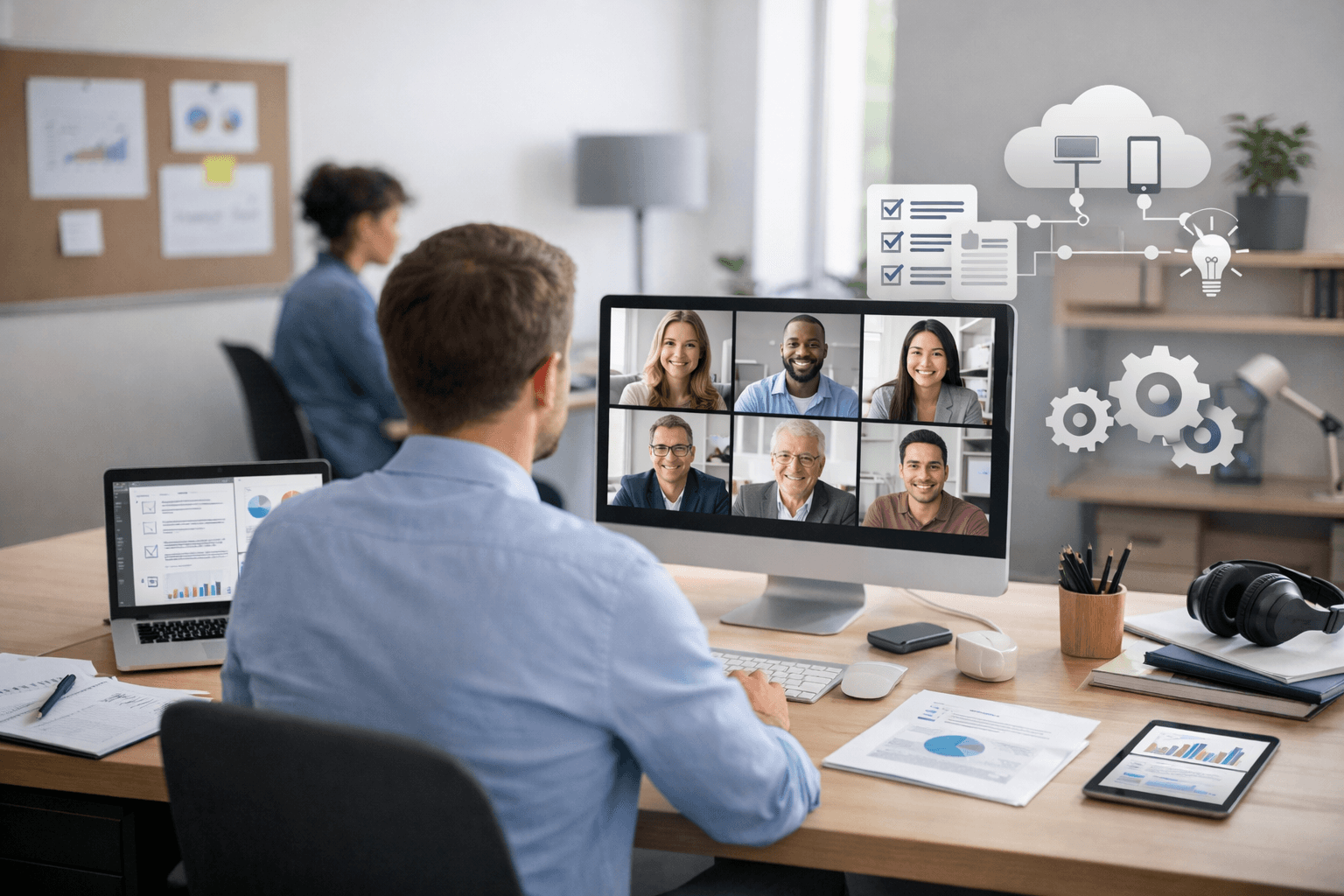
Remote and hybrid work are no longer temporary trends—they are likely to remain a significant part of the global workforce. Organizations continue adopting flexible work arrangements because they expand access to talent, reduce commuting stress, and improve overall employee satisfaction. For leaders, this shift requires adapting traditional management approaches to support distributed teams effectively.
Key Focus Areas for Future Leaders
To succeed in remote and hybrid environments, leaders should prioritize:
Clarity in Communication: Clearly convey goals, expectations, and priorities to keep everyone aligned.
Trust-Based Management: Focus on outcomes rather than hours worked, empowering employees to take ownership of their tasks.
Strong Documentation Systems: Maintain comprehensive records of decisions, workflows, and project updates accessible to all team members.
Technology-Enabled Collaboration: Use digital tools, shared platforms, and intelligent assistants to streamline coordination and reduce friction.
Evolving Leadership Skills
Remote leadership is an evolving skill set. Effective leaders continually refine their approach by experimenting with new communication strategies, gathering feedback, and learning from team experiences. Success comes from balancing structure with flexibility and combining human empathy with modern tools.
Looking forward, the best leaders will create distributed workplaces where employees feel supported, productive, and engaged, leveraging technology and intentional practices to ensure teams thrive regardless of location.
FAQs
What is hybrid leadership?
Hybrid leadership is a management approach designed to effectively lead teams that operate in a combination of in-office and remote work environments. Leaders must balance the needs of employees working on-site and those working remotely, ensuring equitable access to information, fair performance evaluation, and consistent engagement. This style emphasizes communication, trust, flexibility, and the use of digital tools to maintain team cohesion and productivity.
What is the meaning of remote and hybrid work?
Remote work refers to employees performing their jobs entirely from locations outside the traditional office, often from home or other flexible spaces, using digital tools to communicate and collaborate.
Hybrid work is a flexible arrangement where employees split their time between working remotely and working in the office. This model combines the benefits of remote flexibility with in-person collaboration.
What are the 5 types of leadership styles?
Autocratic Leadership – Leaders make decisions unilaterally with little input from team members.
Democratic Leadership – Leaders involve team members in decision-making processes, encouraging collaboration.
Transformational Leadership – Leaders inspire and motivate employees to achieve goals while fostering personal growth.
Transactional Leadership – Leaders focus on structured tasks, rules, and performance-based rewards or consequences.
Laissez-Faire Leadership – Leaders provide minimal guidance, allowing employees to take ownership of their work.
What are the four types of leadership styles?
Autocratic Leadership – Centralized decision-making with clear directives.
Democratic Leadership – Team input is valued, and decisions are collaborative.
Transformational Leadership – Focuses on vision, inspiration, and long-term goals.
Laissez-Faire Leadership – Employees have high autonomy, and leaders provide limited oversight.

Shin Yang
Shin Yang est un stratégiste de croissance chez Sensei AI, axé sur l'optimisation SEO, l'expansion du marché et le support client. Il utilise son expertise en marketing numérique pour améliorer la visibilité et l'engagement des utilisateurs, aidant les chercheurs d'emploi à tirer le meilleur parti de l'assistance en temps réel aux entretiens de Sensei AI. Son travail garantit que les candidats ont une expérience plus fluide lors de la navigation dans le processus de candidature.
En savoir plus
Série de tutoriels : Présentation de notre nouvelle extension Chrome Listener
Stop Keyword Stuffing: How to Write Resumes for Semantic Search
Is Your Resume Being Scored by a Bot? How to Find Out and Improve the Results
Why “Experience” Is Dead: Why Hiring Managers in 2026 Care More About Learning Velocity Than Your Resume
The Reverse Reference Check Script: How to Find the Truth About Your Future Boss Before You Accept the Job
2026 Layoff Proofing: How to Interview for Jobs That Don’t Exist Yet
AI Screening Interview Questions: What Employers Ask and How to Answer in 2026
Is AI Interview Prep Worth It in 2026? What Actually Helps You Get Hired
How to Beat the HireVue AI: Smart Strategies to Pass Video Interviews in 2026
How AI Is Quietly Changing Live Interviews (And What It Means for You)
Sensei AI
hi@senseicopilot.com