

Interviews Are No Longer Just Human Conversations
Not long ago, interviews were relatively straightforward. You walked into a room (or joined a call), answered a series of questions, and relied entirely on your preparation, memory, and ability to think on your feet. Success often came down to how well you had rehearsed common questions and how confidently you could deliver your responses in the moment.
But that model has been quietly changing. Interviews today are no longer just conversations between two people—they are increasingly shaped by technology. From AI-powered screening systems to structured digital interview platforms, candidates are now navigating an environment where tools play a significant role in both evaluation and performance.
At the same time, expectations have risen. Candidates are expected to respond faster, organize their thoughts more clearly, and maintain confidence even under pressure. There is less room for hesitation, especially in competitive roles where small differences in communication can determine the outcome. This creates a gap between what candidates know and how effectively they can express it in real time.
This is where real-time AI enters the picture. Instead of only helping candidates prepare beforehand, a new generation of tools is designed to assist during the interview itself—offering structured guidance, improving clarity, and reducing the mental load of thinking under pressure.
Several trends have accelerated this shift. Remote work has made virtual interviews the default. Global hiring has increased competition across borders. And AI-driven recruitment systems have changed how candidates are assessed at every stage. Together, these forces are reshaping what it means to “perform well” in an interview.
This guide is designed to help you understand this shift clearly and practically. Rather than treating real-time AI as something to fear or avoid, the goal is to show how it fits into the modern interview landscape—and how you can adapt to it in a way that still feels natural, confident, and human.

What “Real-Time AI” Actually Means in Interviews
Real-time AI in interviews refers to tools that assist you while the interview is actually happening, not just before it. In simple terms, it means having an intelligent system that can understand what the interviewer is asking and help you structure or generate responses instantly. Instead of relying only on memory or preparation, candidates can now access support in the exact moment they need it.
To understand this better, it helps to distinguish between two types of AI tools commonly used in the job search process.
Pre-interview AI tools
These are tools you use before the interview begins. They include resume checkers, question banks, and mock interview platforms. Their goal is to help you prepare by improving your materials or practicing responses in advance. While useful, they stop being helpful once the real interview starts.
During-interview AI tools
These tools operate live, during the interview itself. They can detect questions, interpret intent, and provide structured answers or guidance in real time. This includes real-time assistants and systems that help you stay organized and responsive under pressure.
The key difference is timing. Pre-interview tools help you get ready, while real-time AI supports your actual performance. This shift is important because many candidates struggle not with knowledge, but with delivering that knowledge clearly when it matters most.
For example, imagine you are asked a behavioral question like “Tell me about a time you handled conflict.” Instead of pausing to recall a perfect answer, a real-time AI tool can instantly suggest a structured response based on your past experience, helping you answer smoothly and confidently without long hesitation.
Why Real-Time AI Is Growing So Fast in 2026
The rapid rise of real-time AI in interviews is not happening by chance. It is the result of several major shifts in how hiring works today, all of which are increasing pressure on candidates to perform at a higher level in less time.
Increased competition in global job markets
Candidates are no longer just competing locally. With remote work becoming standard, companies are hiring from a global talent pool. This means more applicants for the same role, and higher expectations for clarity, speed, and confidence during interviews.
Rise of remote and asynchronous interviews
Video interviews, one-way recordings, and online assessments have replaced many in-person interactions. These formats often feel less natural and more structured, making it harder for candidates to adapt in real time without support.
Candidates seeking performance support, not just preparation
Traditional preparation is no longer enough. Many candidates realize that knowing the answer is different from delivering it well under pressure. As a result, there is growing demand for tools that help during the actual interview, not just before it.
Improvements in AI speed and contextual understanding
Modern AI systems can now process questions and generate relevant responses in under a second. They also understand context better, allowing for more personalized and structured answers rather than generic suggestions.
Key Drivers Behind Real-Time AI Adoption
Trend | What It Means | Impact on Candidates |
|---|---|---|
Global competition | More candidates applying across borders | Higher pressure to stand out quickly and clearly |
Remote interview formats | Shift to video and asynchronous interviews | Less natural interaction, harder to think on the spot |
Demand for real-time performance support | Focus on delivery, not just preparation | Increased reliance on in-the-moment assistance |
Faster and smarter AI | Sub-second response time with better context awareness | More practical and usable tools during live interviews |
One example of this shift is Sensei AI, a real-time interview copilot that listens to interviewers’ questions and generates answers instantly. It uses your resume and provides context to produce more relevant responses. Tools like this reflect how interview support is moving from preparation to real-time execution.
Try Sensei AI for Free
How Real-Time AI Works Behind the Scenes
Real-time AI may feel almost invisible during an interview, but behind the scenes, it follows a clear and structured process. Understanding how it works can help you use it more effectively and set realistic expectations.
Step 1: Detecting interviewer questions
The system first captures the interviewer’s question through audio or video input. It focuses specifically on identifying when a question is being asked, filtering out irrelevant conversation so it can respond accurately and quickly.
Step 2: Interpreting intent and context
Once the question is detected, the AI analyzes what is actually being asked. It goes beyond keywords and tries to understand intent—whether it is a behavioral question, a technical challenge, or a situational prompt.
Step 3: Matching with user data
After understanding the question, the AI connects it with relevant information you have provided. This may include your resume, the role you are applying for, and any additional context about your experience. This step is what allows responses to feel more personalized rather than generic.
Step 4: Generating structured responses in real time
Finally, the system produces a clear and organized answer almost instantly. These responses are often structured in a way that is easy to deliver, helping you stay concise and confident.
One of the biggest advancements in recent years is speed. Modern systems can generate responses in under a second, which is critical in interviews where even a short pause can feel uncomfortable or signal uncertainty.
That said, real-time AI is not perfect. The quality of its output depends heavily on the quality of the input. If your resume or background information is incomplete or unclear, the responses may also lack depth or accuracy. It works best as a support system, not a replacement for your own understanding and experience.
The Real Benefits (Beyond Just “Getting Answers”)
At first glance, real-time AI might seem like a simple tool for generating answers. But its real value goes much deeper. It changes how candidates think, respond, and perform under pressure in ways that traditional preparation alone cannot achieve.
Reducing anxiety and mental load
Interviews can be mentally exhausting, especially when you are trying to recall examples, structure responses, and stay confident at the same time. Real-time AI reduces this cognitive load by helping you organize your thoughts quickly, allowing you to focus more on delivery rather than searching for the “perfect” answer.
Helping structure better answers under pressure
Many candidates know what they want to say but struggle to present it clearly. Real-time AI provides structured guidance—such as breaking answers into clear points or logical steps—so your responses feel more polished and easier to follow, even in high-pressure moments.
Supporting non-native speakers
For candidates who are not native English speakers, interviews can be even more challenging. It is not just about content, but also clarity and phrasing. Real-time AI can help refine how ideas are expressed, making communication smoother and more professional without changing the meaning.
Improving consistency across multiple interviews
When applying to multiple roles, it is common for performance to vary from one interview to another. Real-time AI helps maintain a consistent level of quality in your answers, ensuring that you present your experience clearly every time.
A simple comparison scenario
Candidate A relies entirely on memory and preparation. When asked a complex question, they pause, hesitate, and give a slightly unstructured answer.
Candidate B has structured support. They respond more smoothly, organize their thoughts clearly, and deliver a concise answer with relevant examples.
The difference is not necessarily knowledge—it is execution.
Tools like Sensei AI take this a step further by generating personalized responses based on your uploaded resume and the specific role you are targeting. This makes answers more tailored to your background, rather than sounding generic or overly scripted.
Practice with Sensei AI
Common Concerns and Misconceptions
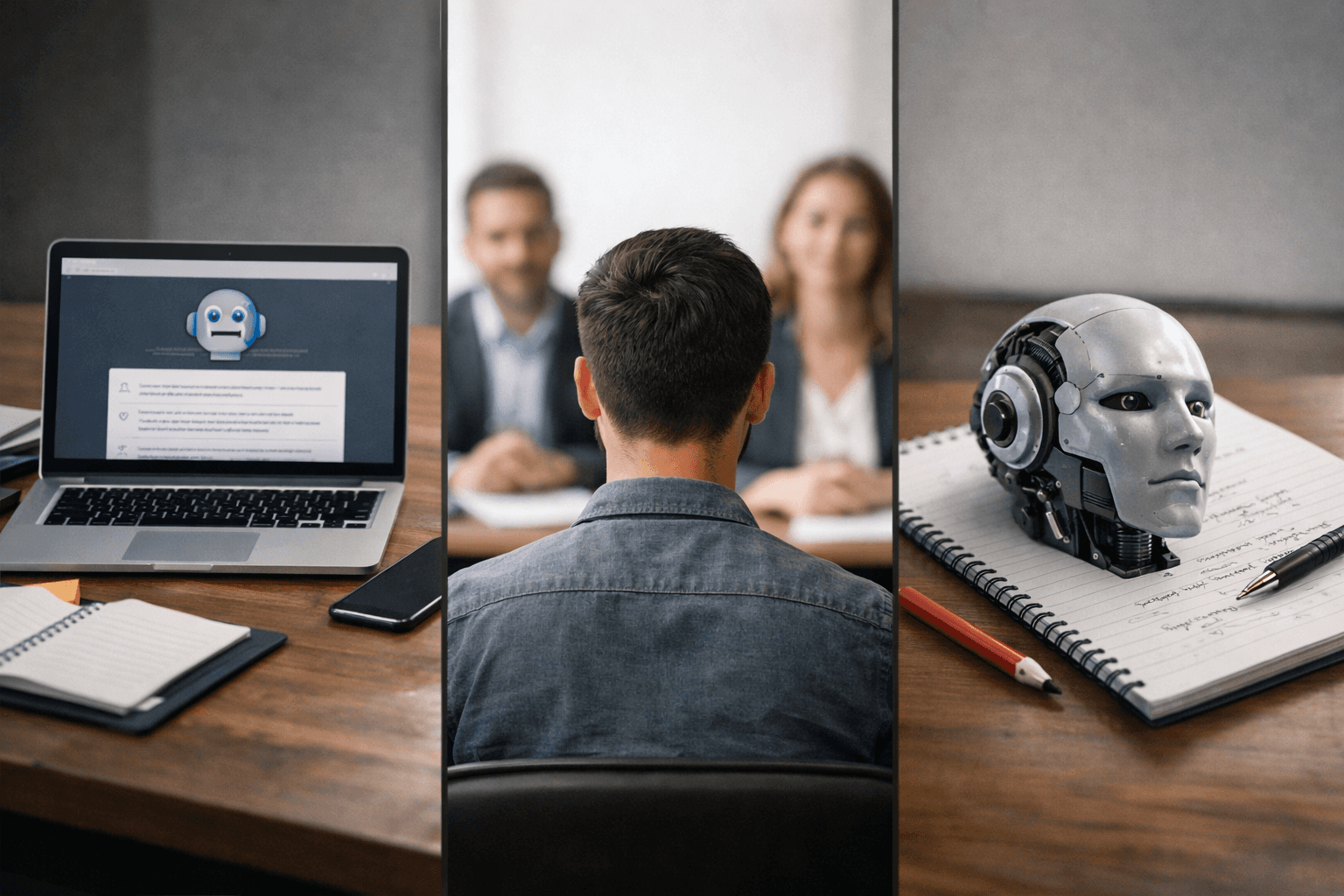
As real-time AI becomes more common in interviews, it is natural for candidates to have concerns. Understanding these concerns—and addressing them honestly—can help you use these tools more effectively and responsibly.
“Is this cheating?”
This is one of the most common questions. The answer depends on how the tool is used. If you rely entirely on AI without understanding your own answers, it can become problematic. However, using AI as a support system to organize thoughts and improve clarity is closer to using notes or structured frameworks. The key is that your experiences, ideas, and decisions should still come from you.
“Will interviewers detect it?”
Modern real-time AI tools are designed to be subtle and non-intrusive. In most cases, interviewers are focused on your communication and problem-solving ability rather than how you structure your thoughts internally. That said, overly scripted or unnatural responses can raise suspicion, which is why delivery still matters.
“Will it make answers sound robotic?”
This concern is valid, especially if candidates rely too heavily on generated responses. AI outputs can sometimes feel generic if used without adjustment. The best approach is to treat suggestions as a guide—something to adapt in your own words rather than repeat exactly.
Ultimately, the effectiveness of real-time AI depends on how you use it. Candidates who personalize responses, adjust tone, and stay engaged in the conversation tend to benefit the most. Those who rely on it passively may struggle to sound authentic.
Real-time AI works best when it enhances your thinking, not replaces it. It should help you communicate more clearly and confidently, while still allowing your personality, experience, and judgment to come through.
Real-Time AI vs Traditional Interview Preparation
For years, interview success has been built on preparation—reviewing common questions, memorizing frameworks, and practicing responses in advance. While this approach is still valuable, it does not always translate perfectly into real interview performance. This is where real-time AI introduces a meaningful shift.
Traditional Prep vs Real-Time AI Support
Aspect | Traditional Method | Real-Time AI |
|---|---|---|
Preparation vs performance | Strong focus on preparation before the interview | Focus on supporting performance during the interview |
Memory vs adaptability | Relies heavily on memory and recall | Adapts responses dynamically based on the situation |
Practice vs execution | Emphasizes repeated practice and rehearsal | Helps with real-time execution under pressure |
Response structure | Depends on candidate’s ability to organize answers mentally | Provides structured guidance instantly |
One of the biggest challenges candidates face is the gap between preparation and performance. You might have practiced dozens of questions, but when a slightly different version appears, it can still feel difficult to respond smoothly. Real-time AI helps bridge this gap by adapting to the exact question being asked, rather than relying on pre-rehearsed answers.
Another key difference is memory versus adaptability. Traditional methods depend on how much you can remember under pressure. In contrast, real-time AI reduces that burden by helping you adjust your responses dynamically, making it easier to stay clear and focused.
Finally, there is the difference between practice and execution. Practicing answers is useful, but executing them well in a live conversation is a separate skill. Real-time AI supports that execution, especially in high-pressure situations.
For preparation, tools like Sensei AI’s AI Playground offer a simple way to practice answering interview questions in a conversational format. This helps candidates refine their thinking before stepping into a real interview setting.
Try Sensei AI Now!
When You Should (and Shouldn’t) Use Real-Time AI
Real-time AI can be a powerful support tool, but it is not something you should use blindly in every situation. Knowing when it helps—and when to rely more on your own thinking—makes a significant difference in how effective it is.
Best use cases
Real-time AI is particularly useful in structured interview formats where clarity and organization matter most. This includes behavioral interviews, where you need to present past experiences clearly, and technical interviews that involve explaining concepts rather than solving problems entirely from scratch. It is also valuable in high-pressure scenarios where nerves might affect your ability to respond smoothly. In these cases, having structured guidance can help you stay focused and confident.
Situations to be cautious
There are also situations where relying too much on AI may not be ideal. For example, in deep technical whiteboard interviews or live coding sessions, interviewers often expect you to demonstrate your thinking process step by step. Similarly, in highly regulated industries or roles that emphasize strict compliance, authenticity and independent reasoning may carry more weight than structured responses.
Another important factor is authenticity. Over-reliance on AI can make your answers feel less natural if you follow suggestions too closely without adapting them. Interviewers are not just evaluating what you say, but how you think and communicate.
The best approach is balance. Use real-time AI as a support system to guide your structure and improve clarity, while still applying your own judgment, experience, and voice. When used thoughtfully, it enhances your performance without taking away what makes your responses genuinely yours.
How to Use Real-Time AI Effectively Without Sounding Artificial
Using real-time AI effectively is not about repeating what it suggests word for word. The real skill lies in blending its guidance with your own voice so that your answers still feel natural, confident, and human.
Customize answers to your tone
Every candidate communicates differently. Some are more direct, while others are more conversational. Instead of copying AI-generated responses exactly, adjust the tone to match how you normally speak. This helps maintain authenticity and ensures your answers feel like they truly come from you.
Keep responses concise and natural
One common mistake is over-explaining. AI suggestions can sometimes be slightly longer or more structured than necessary. Focus on keeping your answers clear and to the point, while still covering the key ideas. Short, well-organized responses are often more effective than long, overly detailed ones.
Use AI as a guide, not a script
Think of real-time AI as a framework provider. It helps you organize your thoughts, but it should not replace your thinking. Use it to identify key points or structure, then deliver the answer in your own words. This approach keeps you engaged in the conversation rather than sounding rehearsed.
Practice integrating suggestions smoothly
Like any skill, using real-time AI takes practice. The more familiar you are with turning structured suggestions into natural speech, the more seamless your delivery will become. This reduces hesitation and helps you respond more fluidly during actual interviews.
Before vs After Example
Before (less structured response):
“I worked on a project where there were some disagreements in the team, and we had to figure things out. I tried to talk to people and eventually we solved it, and the project was successful.”
After (structured but still natural):
“In one project, our team had a disagreement about the direction of the solution. I took the initiative to speak with each team member to understand their perspective, then helped align everyone on a shared approach. As a result, we resolved the conflict quickly and delivered the project on time.”
The second version is clearer and more structured, but it still sounds like a real person speaking—not a script. That balance is what makes real-time AI truly effective.
The Future of Interviews: What Comes Next
Interviews are continuing to evolve at a rapid pace, and the role of AI is becoming more deeply embedded in both how companies evaluate candidates and how candidates prepare and perform. What used to be a purely human interaction is now becoming a hybrid experience shaped by technology on both sides.
AI becoming standard in both candidate and recruiter workflows
AI is no longer limited to candidate-side tools. Recruiters are also using AI for screening resumes, analyzing responses, and structuring interviews. This means both sides of the hiring process are increasingly supported by intelligent systems, making AI a standard layer rather than an optional tool.
Smarter detection, but also smarter personalization
As AI adoption grows, systems are becoming better at detecting patterns, inconsistencies, and communication styles. At the same time, personalization is also improving. Instead of generic outputs, AI tools are becoming more context-aware, adapting to job roles, industries, and individual candidate backgrounds.
Shift from memorization to communication and decision-making skills
Traditional interview success often depended on how well candidates could memorize answers or frameworks. That is shifting. Future interviews are placing more emphasis on how clearly candidates communicate, how they structure their thinking, and how they make decisions under pressure. AI tools support this shift by reducing the need for memorization and allowing more focus on expression and reasoning.
Overall, the direction is clear: candidates who learn how to work with AI—not against it—will have a significant advantage. The goal is not to replace human thinking, but to enhance it, allowing candidates to present their skills more effectively in increasingly competitive environments.
Adapt Early, Stay Human

As interviews continue to evolve, one thing becomes clear: real-time AI is not just a temporary trend. It is gradually becoming a core part of the modern interview ecosystem, shaping how candidates prepare, respond, and perform across different industries and roles.
Key takeaways
Real-time AI is becoming part of the interview ecosystem rather than an optional add-on
The goal is not to rely on it blindly, but to use it to enhance clarity and performance
Candidates who combine preparation, self-awareness, and smart tools will consistently stand out in competitive hiring environments
The most important mindset shift is understanding that AI is a support system, not a replacement for your own thinking. It works best when it helps you express your ideas more clearly, structure your answers better, and reduce unnecessary pressure during interviews.
In the end, interviews are still about people. AI simply helps you show your best version more clearly, giving you the confidence and structure to communicate your skills in the most effective way possible.

Shin Yang
Shin Yang est un stratégiste de croissance chez Sensei AI, axé sur l'optimisation SEO, l'expansion du marché et le support client. Il utilise son expertise en marketing numérique pour améliorer la visibilité et l'engagement des utilisateurs, aidant les chercheurs d'emploi à tirer le meilleur parti de l'assistance en temps réel aux entretiens de Sensei AI. Son travail garantit que les candidats ont une expérience plus fluide lors de la navigation dans le processus de candidature.
En savoir plus
Série de tutoriels : Présentation de notre nouvelle extension Chrome Listener
Sensei AI vs Interviewing.io: Which Interview Tool Is Better for You in 2026?
Sensei AI vs Huru: Which AI Interview Tool Is Better in 2026?
Sensei AI vs Interview Warmup: Which Interview Practice Tool Is Better in 2026?
How Recruiters Detect AI Answers (and How to Stay Authentic)
Interview Copilot vs Traditional Interview Coaching: Which Is Better for Your Next Interview?
Best AI for Behavioral Interview Questions: 9 Tools to Practice Smarter in 2026
Google Interview Warmup Alternatives: 9 Best Tools to Practice for Interviews in 2026
How to Practice for an Interview by Yourself: A Step-by-Step Guide That Actually Works
Best AI Tools for Job Seekers in 2026
Sensei AI
hi@senseicopilot.com